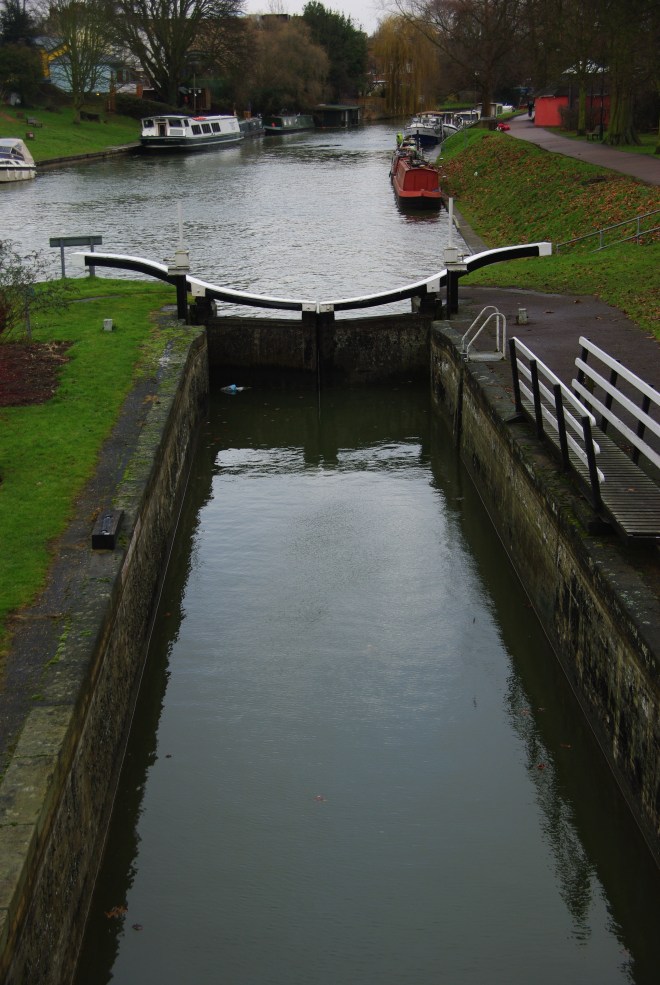
I was born and brought up in Cambridge, that lovely old town with a market and hundreds of interesting pubs and churches… or churches and pubs if you would prefer. It is on the edge of the fens, those long low-lying black miles of emptiness and distant horizons, wonderful vistas and incredible skies. The river running through it used to be of import as a method of transport – if you ever punt along it you may feel the end of your pole grate on a stone causeway which runs along the middle, horses used it to pull barges. The river leads out into the fens and ultimately to the sea. The sea is probably about seventy miles away but because the land is so flat the freezing easterlies blow in and you can almost taste it on some raw days… sometimes it is so cold you’d swear the wind speaks Russian. In the old days when there was a ‘blow’ the sugar beet from the fields would be ripped up and lodge in the hedges, the wind was so strong. Fifty miles north of London, the Cambridge accent has that city sound, but with a country burr, so Cambridge becomes Kimebridge, ‘h’s go missing, and things become fings. Cambridge folk are tough and cheery and have a particular look; I can walk down the streets and think ‘you were born here, and you, and you’.
Oh yes, and Cambridge has a University which is quite well-known…. it has a rival which is Oxford, but who could compare the two cities?



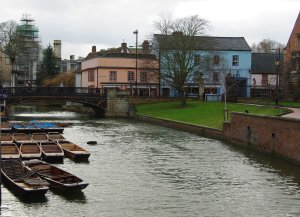
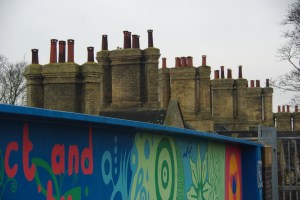
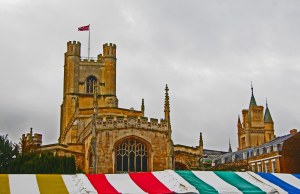
All photos © Bari W Sparshott

 Lois Elsden
I definitely am enjoying these photos, Lois.
Cambridge is high on my list of English towns I want to visit. I was in Oxford once -very briefly- and thoroughly enjoyed it. In fact, I had the best fish stew I have ever tasted at a little pub in town. I also experience for the first time in my life “tea time.”
I have to ask: why is tea time such a significant part of English culture?
LikeLike
Oooh, now you’re asking, Jeremy…. I think it deserves a whole post! It was two things really, fashionable ladies would take tea in their drawing rooms – drinking it out of little dishes rather than cups… I guess in a sort of imitation of Japanese and Chinese tea ceremonies; everything from Japan and China was fashionable then. It was a little intermission between lunch and dinner in the evening. At the other end of the scale, workers would have a tea-break to refresh themselves cheaply and non-alcoholically. I guess it just developed from there, but it’s still quite important to many people… I can drink tea at any time! I’ve scheduled a post for this evening about tea drinking!
LikeLike
Thank you for the info. 🙂
Tea-drinking has so much cultural meaning (and freight) surrounding it and I have become fascinated by its significance. In the U.S. there is the famous “coffee break” but it can happen at any time. Whereas I had tea in Oxford at 4 p.m. One of the people whom I was with -an Oxford alumnus- told me that she had tea at 4 p.m. (virtually) every day when she was a student. That things did stop for tea.
It’s a ritual I really enjoy. Here in Canada I have been invited to tea by a man whose connection with his English roots is strong. He served me tea (Earl Grey with milk) and finger food (though no cucumber sandwhiches, I’m afraid).
LikeLike
How very civilized!
LikeLike