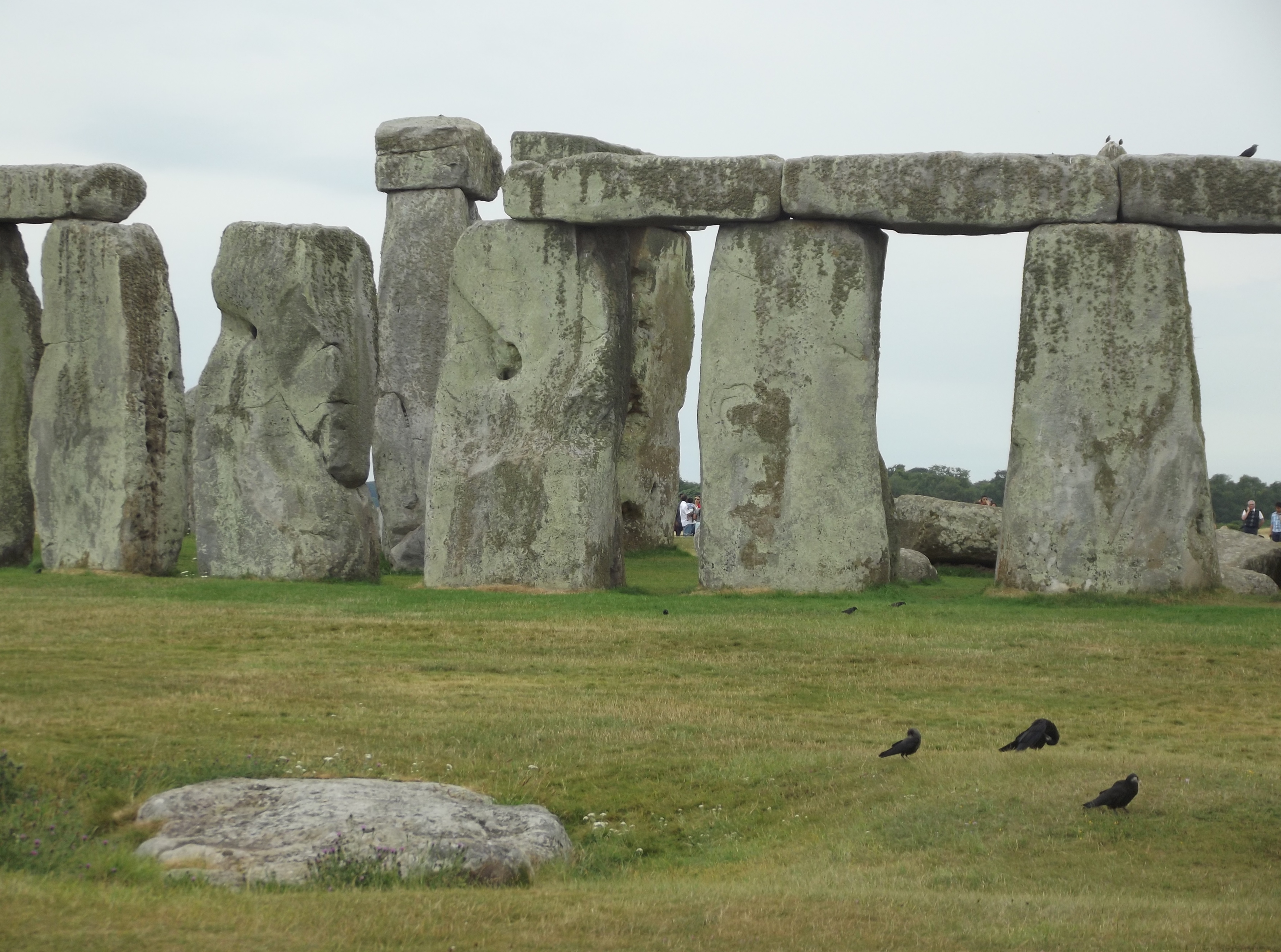
 On the south side of Stonehenge, lying on its side is one of the huge stones which make the monument. You can see it at the front of the photo. It is called the Slaughter Stone, which is a bit misleading, because it makes it sound as if it was used for some sort of ritual sacrifice. In fact it probably wasn’t, and may not even have been lying down but my have been standing as the other stones are. It is about 21foot long but it has sunk so only the upper part of it shows through the grass. , When it rains, the stone appears red because of the type of stone it is; if the other stones were similarly p[positioned they would look red too. Rainwater affects the iron in the stone and makes it look like blood. Three different sorts of stone make up the henge, bluestones from the Presili Hills in Wales, the sarcens which come from an area north of the site near Avebury, and this stone, a red sandstone, which may have come from near Milford Haven, thirty miles south of the Presili Hills.
I think the three black birds are crows… I wish they were ravens… here’s a poem about three ravens, the twa corbies:
The Twa Corbies
As I was walking all alane,
I heard twa corbies makin a mane;
The tane unto the ither say,
“Whar sall we gang and dine the-day?”“In ahint yon auld fail dyke,
I wot there lies a new slain knight;
And nane do ken that he lies there,
But his hawk, his hound an his lady fair.”“His hound is tae the huntin gane,
His hawk tae fetch the wild-fowl hame,
His lady’s tain anither mate,
So we may mak oor dinner swate.”“Ye’ll sit on his white hause-bane,
And I’ll pike oot his bonny blue een;
Wi ae lock o his gowden hair
We’ll theek oor nest whan it grows bare.”“Mony a one for him makes mane,
But nane sall ken whar he is gane;
Oer his white banes, whan they are bare,
The wind sall blaw for evermair

 Lois Elsden