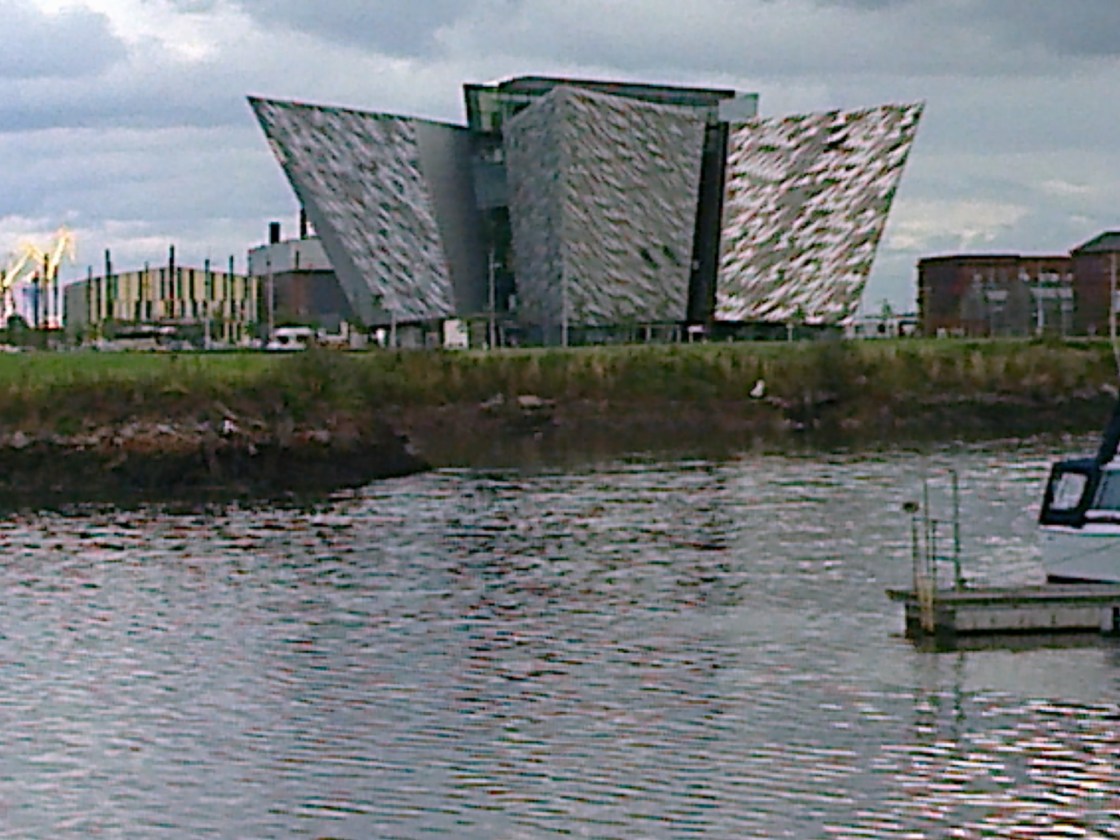
You may have seen this article on the BBC news site, and it caught my eye; having been to Belfast so often where Titanic was built, and having recently seen the amazing museum complex at the docks I was interested in the story. I don’t really like disaster movies, although I have seen both ‘A Night to Remember’ and ‘Titanic’, I find the whole story so terribly tragic. The Titanic experience, the wonderful museum in Belfast, tells the story not just of the dreadful demise of the ship, but of its building and the men and women of Belfast who worked on it.
The BBC story lists five myths which have arisen for various reasons (as myths do) some through scenes in the film which are just a fiction, some from unsubstantiated rumours after the horrors of the tragedy, and some through more malign and purposeful intent:
- Unsinkable – apparently this was from comments made after the sinking, before it had happened nobody every really contemplated that such a ghastly thing could happen to such a colossal ship. The idea was also part of the film version of events, it added to the drama for a character to mention the unsinkability of Titanic before it set forth
- Last song – no-one really knows what was the last song the band played; it seems certain that they bravely played on while the events were unravelling, but ‘Nearer My God To Me’ was another cinematographical scene, the idea taken from a newspaper headline after the sinking… some of the survivors mentioned the band courageously playing rag-time music, something cheery and upbeat to keep spirits up
- Going sown with the ship – Captain Smith is shown as a hero, bravely going into the Atlantic with his ship beneath his feet; however his handling of the disaster and failure to follow procedures may well have cost many people their lives. It could have been that he was so shocked by events that he was too traumatised to command events as he should have done. With the recent tragic sinkings of La Concordia in Italy and the Sewol in Korea, ships’ the role of the ship’s captain and how Captain Smith might have behaved is brought into focus.
- J Bruce Ismay, the president of the company who commissioned the ship has been shown as a villain, bullying the captain into going too fast in dangerous waters; however the story is more complex than that, and certainly a campaign against Ismay was mounted by the vile Randolph Hurst through his media empire. There is a nasty Anti-Semitic take on events in a German film of 1943
- Third class deaths – it is true that more passengers from the ‘steerage’ class died, and it is true that there were gates in the ship to keep passengers to particular areas, but there is no truth that third class passengers were locked below decks… there were many reasons why so many people from this list died, every death was tragic, but the reason for so many of those deaths is not as clear-cut as the movies make it seem
Read all about these myths here, it’s a fascinating article:
http://www.bbc.co.uk/news/magazine-17515305

 Lois Elsden