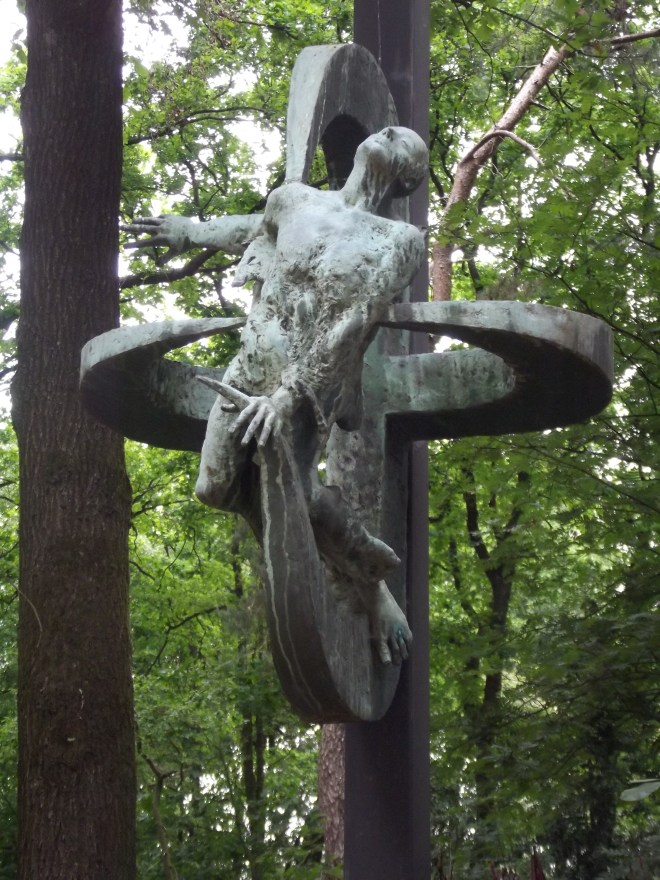
The war museum at Overloon in the Netherlands, is not just a museum; it is not just showing evidence of the past and what happened during the last years of the war, although it does do that. Neither is it telling the story of the war as it affected the people of the Netherlands, although it also does do that.
In the guide to the museum, it very clearly states that as visitors to Overloon, we are ‘invited to think about war and oppression‘. The guide sheet asks: how far are you allowed to go when the issue concerns keeping and, if need be, winning back freedom?‘
No-one coming to the museum is left in any doubt that this is not a place to celebrate war or remember the victories; again, the guide says ‘war belongs in the museum‘, and that is the motto of the museum at Overloon. The history of the war is told, and the fact that more than fifty million people from many, many nations lost their lives in those years. Other millions of people may not have lost their lives, but they lost much else.
In Britain there were many hardships suffered, but we were never oppressed as the Dutch people were; they had to deal with all that went with being over-run buy an enemy, they suffered incredible hardships, restrictions, and starvation; however they were strong and resourceful, and many brave people resisted the occupation in a variety of ways. The final act of the war was liberation, the wonderful regaining of freedom As part of Operation Market Garden, carried out in the autumn of 1944, the battle of Overloon took place; it is the heaviest tank battle ever to have taken place on Dutch soil, and it is on that battlefield that the museum is now situated.
http://www.oorlogsmuseum.nl/en/


 Lois Elsden