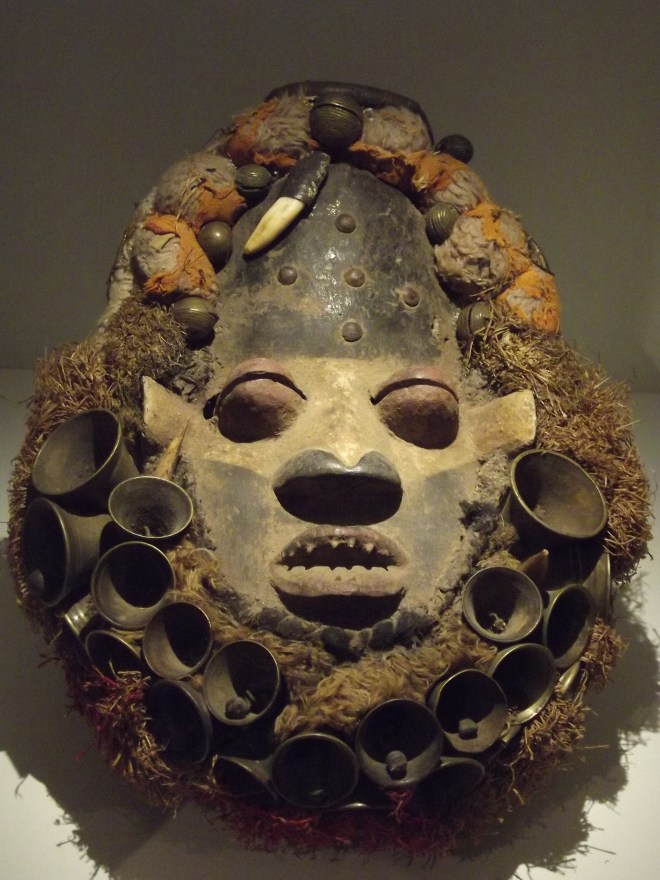
We always have a wonderful time when we visit our friends in the Netherlands, and this year as well as enjoying a week in their company, and talking and laughing, and gossipping, and visiting family, we went to some really interesting places including a museum all about clocks and bells.
Before we arrived I did wonder exactly how much and what I would see… well, my eyes were opened about the world of bells. The idea of something contained within a closed space and rattling around must have come from earliest times when people found fruit and nuts and pods with loose seeds inside which would rattle within them. They must also have enjoyed the sound of rhythmically hitting something against something else to make a nice beat and sound. Before long, as early technology developed, wooden clappers were made, or shakers with things attached which would make a pleasing and particular noise. From wood to metals as people learned to use the minerals they found, and before long there was the simplest bell produced. Many of these things were used in the same way as we use them now, as warnings, as music, for religious and spiritual purposes, on hunters, and warriors, and kings and queens and dancers…
The museum, which tells this story, also includes clocks, because attaching sound to time began in order to call people to prayer… in an when people lived their lives ruled by the sun, and the natural rhythms of the seasons, exact time was only important for particular purposes, not like today when we are governed by it! So at the museum there were early clocks, and many examples of carillons which were used across the continent. In Britain most of our church bells are pulled by ropes (I don’t know the technical term!) and bell ringing is a complicated and mathematical process… I’d be no good at it then!
The museum is also a museum of th natural history of the area, and if the weather had not been so inclement we would have explored more of this. If you should be fortunate to be in the area, do visit this wonderful and fascinating place!
http://www.museumasten.nl/files/Engels68833.pdf
http://www.vvvdepeel.nl/Plaatsen-in-De-Peel/Asten.aspx?sc_lang=en

 Lois Elsden