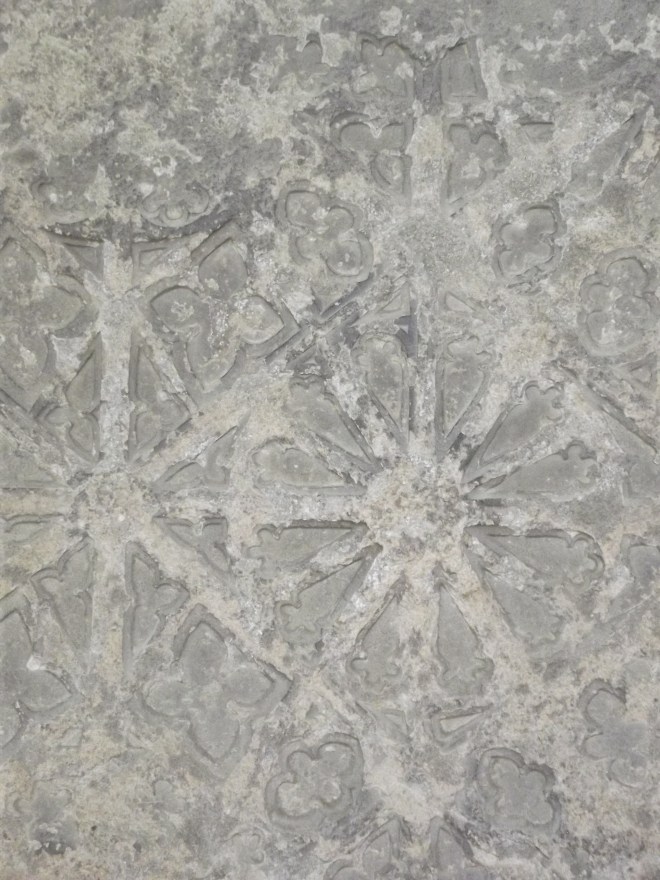
Purbeck stone or Purbeck marble is often mentioned in information about buildings and places of architectural interest… and I never really thought much about it, guessing that maybe it came from Purbeck which is in Dorset. I was right, when I looked it up I found that it is a type of limestone found on Purbeck island and has been quarried since Roman times, if not before. At first it was just quarried but gradually it began to be mined from underground, accessing it from shafts and pits, as opposed to the opencast workings there had been before.
Limestone is a sedimentary rock, formed by layers of material being deposited in water and gradually building up then changing through the pressure of the weight above over millions of years. It happened at a time when the continents as we know them were still forming, when the single large land mass, Pangaea split into two supercontinents, Laurasia and Gondwana to the south which created the Atlantic Ocean.
The oldest shafts date back to 1650, and since 1651 the family firm of H.F.Bonfield and Son has been quarrying Purbeck stone which has been used in Hampton Court, the cathedrals at Ely and St. Paul’s, and in many other and very varied projects such as pedestrian paving in Southampton, the sewerage treatment works in Swanage, gardens in Westminster, and Stowe School and the town hall in Bournemouth.
Have a look on the Bonfield site for more interesting information, such as the different type of limestone ‘beds’, rag, roach, thornback, whetson bed, freestone, laper, downsvien, feather, cap, vyebit, whitebit and the wonderfully named brassy bed. There is also a list of the different sort of masonry that the company offer, with wonderful evocative names, including setts, string course, quoins, lintels, mullions and corbels,
If you visit their webpage you can see some lovely photos:
http://www.naturalpurbeckstone.co.uk/
If you want to find out much, much more about Purbeck stone and marble, look here:
http://www.stone.uk.com/history/

 Lois Elsden