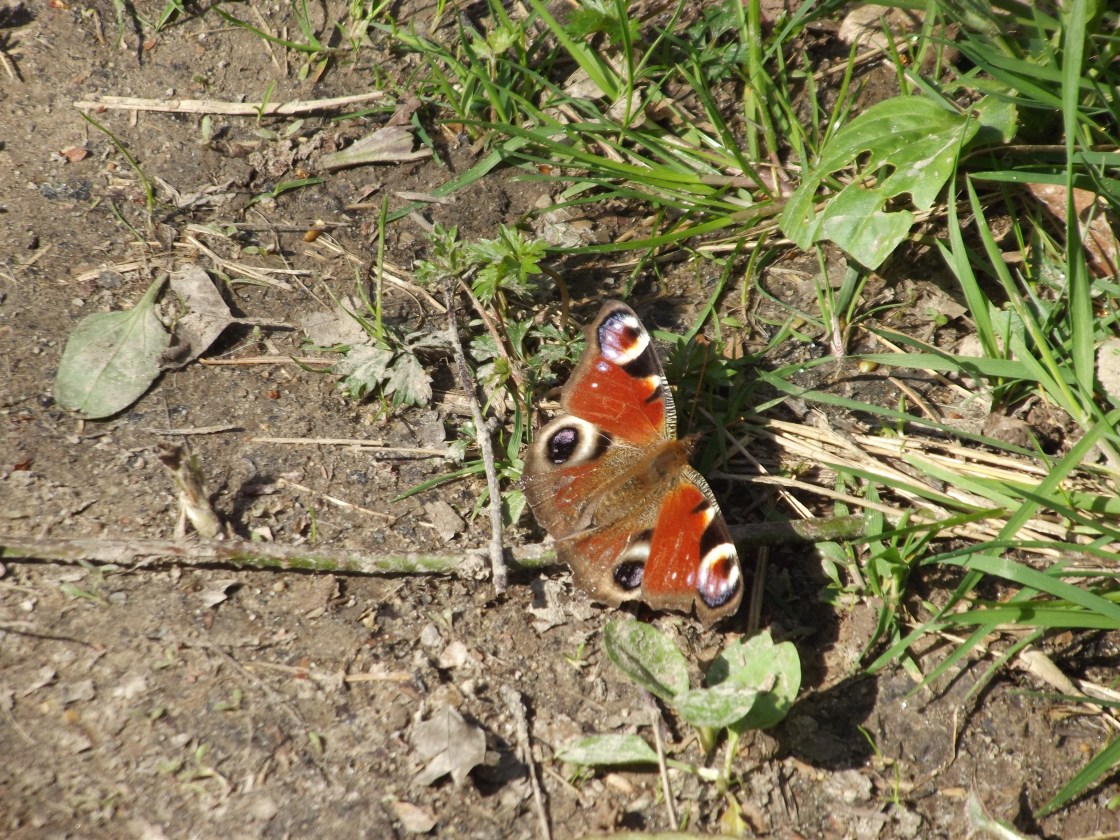
We were thrilled to see a peacock butterfly while on holiday in Norfolk at Easter; Easter was late this year, but it still seemed early to see a peacock! It is so recognizable with its ‘eyes’ which no doubt have developed as a defence against predators. Its under-wings are black, so when it is at rest with its wings folded up it is almost perfectly camouflaged. The peacock can be found all across Britain, right up as far as the Shetland Isles, and seems to be happy in almost any environment.
The peacock caterpillars love nettles, but the grown-ups enjoy a wider range of plants for nectaring – feeding, including adults feed primarily on thistles, bluebells dandelions, marjoram, privet and ragwort. The male, like most males, seek out the females and give chase, and once they have been successful the female can lay up to four hundred eggs in piles underneath nettle leaves. The eggs hatch really quickly, in 1 to three weeks, and then the larvae form communities under a protective web to feed, day and night; having large numbers together helps protect against predators while they grow and go through four moults as they grow bigger. When the pupae form, they take between two to four weeks to develop and hatch into more beautiful peacock butterflies.

 Lois Elsden