I’m only really any good at French, but I have a fascination for other languages and over the years have dabbled in German, Russian, Italian, Spanish and struggled with Gaelic… I may not be very good, or any good, and I may forget more than I remember, but I just find it so interesting finding out about the different sounds and structures and words. As you can imagine, I’ve learned with lots of different courses, methods and classes.
Recently I have been trying to learn Dutch on Duolingo as our dear friends are Dutch and so is my son’s lovely girlfriend. It’s a really good course and builds on what you’ve learned in tiny steps, but practising over and over so what you learn stays learnt! I am also doing a MOOC (massive open on-line course) in Dutch later in the spring, and having enjoyed all the MOOCs I’ve done so far I’ll be interested to see how they teach us on this one.
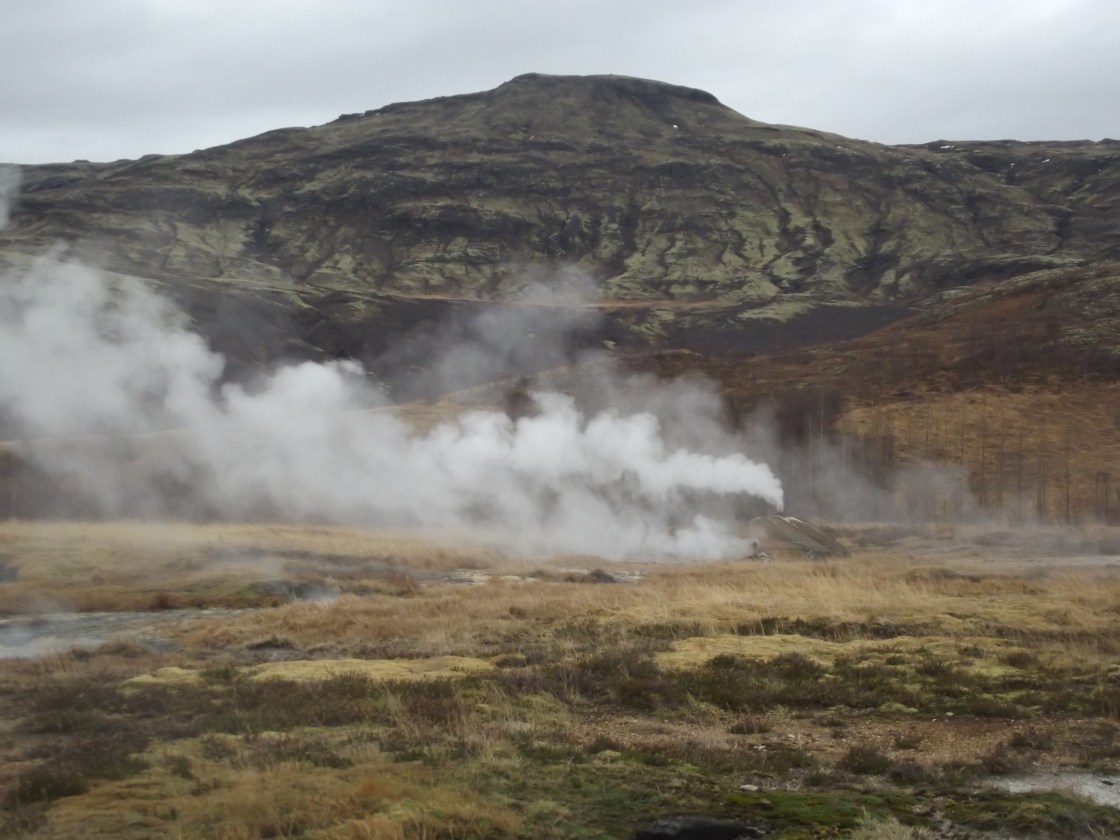
Having been to Iceland and fallen in love – with the country not some gorgeous Icelander! – I thought i would have a look at the language. There are only just over 300,000 Icelanders, so it is a tiny population, but the language spoken developed from the language of the first Norwegian Vikings who settled there. It is fascinating to think that the language is a thousand years old and has changes so little that the old Norse texts can be read with little difficulty.
We have a lot of Viking words in English, and even more which have the same roots… so in learning the language I would have thought it useful to try and learn those words which are already familiar; in the course I have bought (book and CDs) it starts very sensibly with the sounds of the language… and it does use some of those familiar words such as sandur/sand, hundur/hound (dog), penni/pen… but it also has quite difficult words which are not the sort of vocabulary a beginner might use bondí/farmer, neisti/spark, loft/air… well, that’s ok, I’m practising them all as I drive along listening to the CD.
I also think when learning a language for whatever reason, as a tourist to a different country, as someone wanting to live in another country, to speak to a friend, or just out of interest, there are certain key things to learn first… for example greetings/farewells, courtesies, and introductions. This Icelandic course starts like that, with introductions… good I’m practising, but then there is a list of countries and languages; since the medium of the book is English, I really only need to know at this most basic level ‘I am English’, ‘I come from England’, ‘I love Iceland’…
The book continues with descriptions of people which is useful, but not yet! I might need to know how to ask for something in a shop or café, I might need to know how to count, I might need to know days and months and time… but I really don’t think I need to know how to say someone is dark-haired! Once I get good enough to read stories or have an Icelandic pen-pal, then maybe I will need to know this, but not as a beginner!

 Lois Elsden
I became fascinated with the origins of the basque language years ago as it bears no similarities with any other language in Europe. Some say it dates back to the stone age. The basque people voyaged and traded with people in Iceland and developed a form of pidgin basque to be able to do business. On one show I watched there was a stoneage like tribe in a lost part of the Amazon jungles that spoke a language very similar to basque and it remains a mystery today as there contact with the outside world was nonexistant. So when you learn icelandic there will be a little basque in there to.
LikeLike
I’ve just looked up Basque because I didn’t know much about it apart from where it came from and a little about the political ambitions of the Basque people… fascinating, really fascinating, and mysterious! thanks for mentioning it!
LikeLike