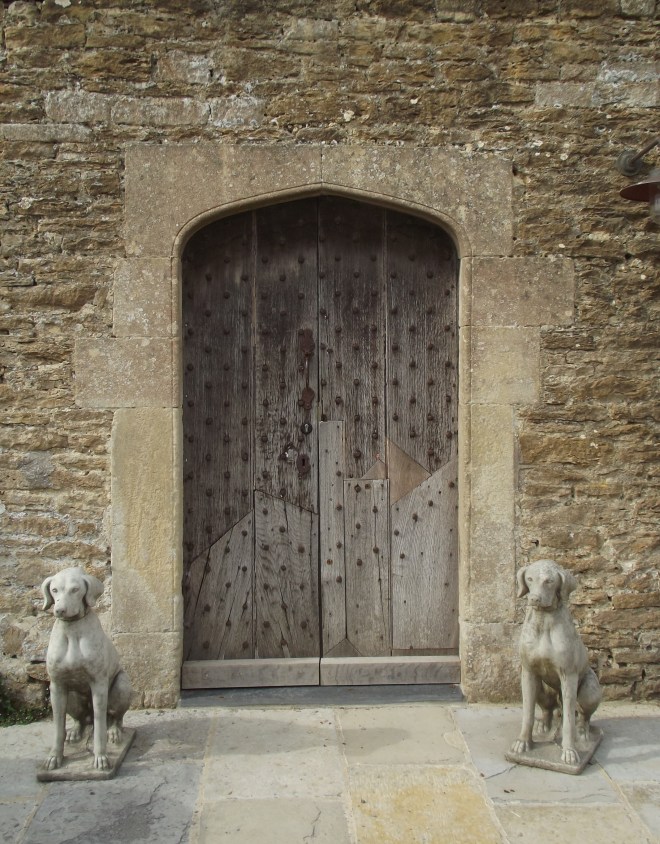
Dog, man’s faithful friend, a creature whose ancestors were wolves, has a name in English which seems to have come from nowhere… well, from dogca, but where did that come from? The original four-legged friend was called a hound in English… but dogca/dog arrived and displaced it. Maybe it means muscled, powerful, and described a particular breed of dog, but it has no equivalent in other languages.
In Latin languages it is chien/chen/cano/câine/can/qen (French, Haitian, Italian, Romanian, Gallicean, Albanian). In Scandinavian and Germanic languages it approximates hound – hund/hond/hundur (German/Danish/Norwegian/Swedish, Dutch/Africaans, Icelandic… there are similar words in Slav languages which begin with ‘p’ and there are other languages which are totally unlike any other which have their own words… but where does ‘dog’ come from?
As you may imagine, since dogs are so integral and integrated to many human homes and work, there are plenty of phrases and sayings attached to them, for example:
- a real dog – unattractive, ugly (usually,unfortunately a woman)
- dog watch
- go to the dogs – go down hill, worn out, worn down
- lucky dog, sly dog – lucky, very lucky
- dog’s life – easy life
- you dog – derogatory
- dog tag
- dirty dog
- dog eat dog
- dog – a tool or device for holding, gripping, or fastening something, sometimes with a tooth-like projections
- fire dog – metal support for logs in a fireplace
- dog-eared – worn book
- hot dog
- underdog
- my dogs are barking – my feet hurt!
- dog collar
- put on the dog – get dressed up
I’m sure there are plenty more too!

 Lois Elsden
It’s a doggone shame. My tears fell like rain. Gotta get my snowblower and clean the driveway again. Seeyah tomorrow. Ciao!
LikeLiked by 1 person
You’ll be dog-tired after that!
LikeLike