
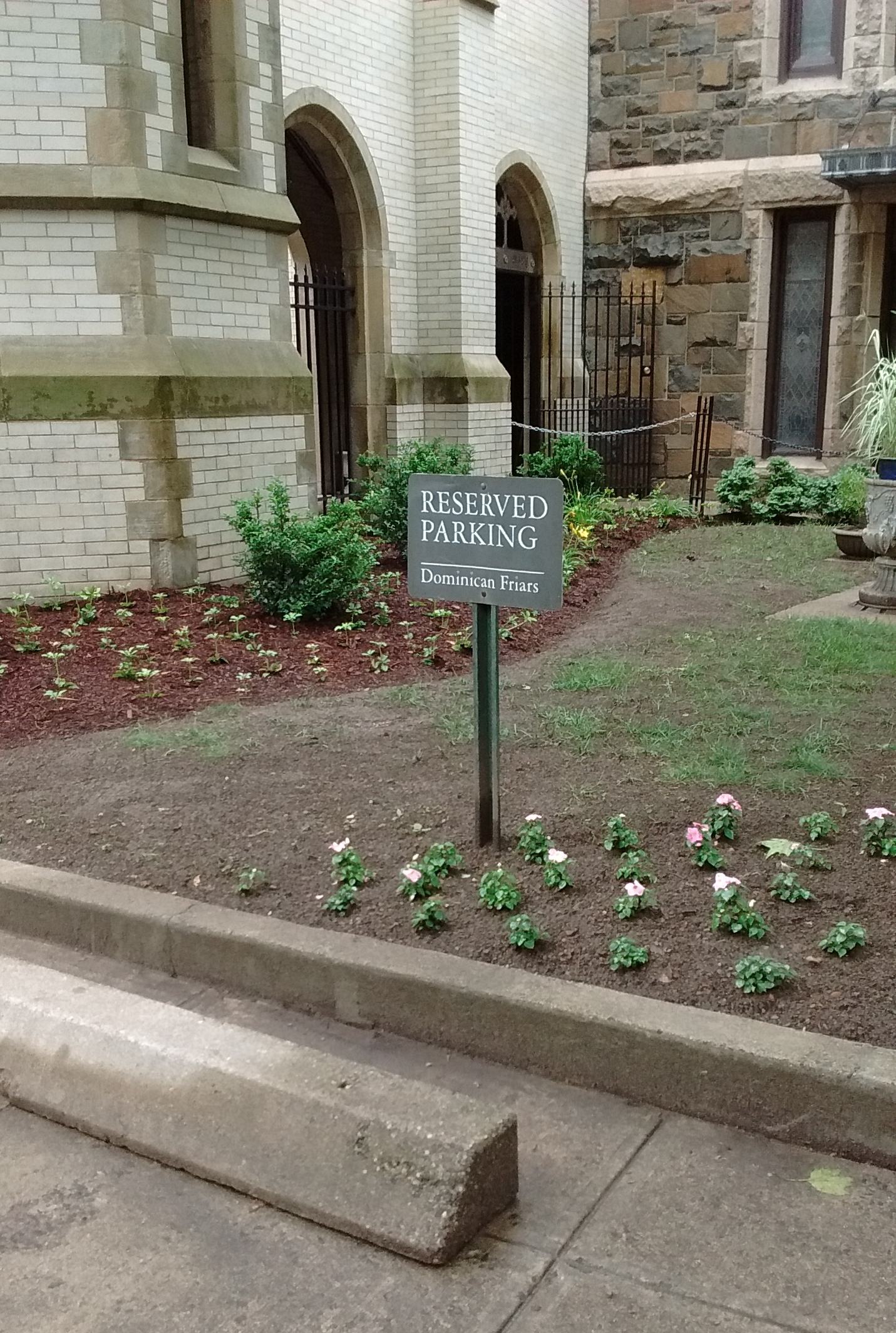
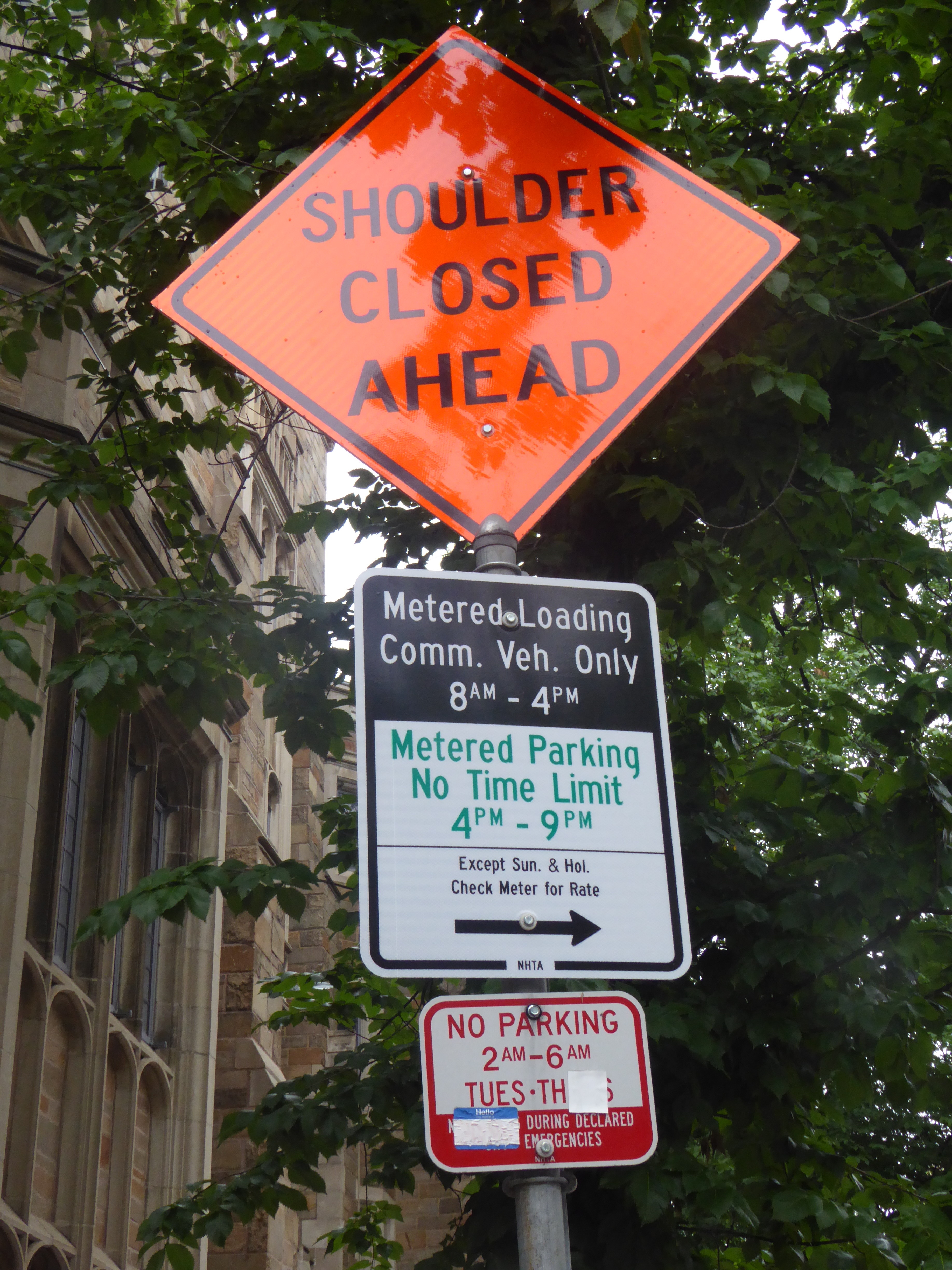
While we were away we saw many street signs, which to us seemed very different from what we have ‘at home’, and I was reminded of an Australian friend who thought a sign in our village was amusing ‘Traffic in middle of road’.
I also noticed a comment today from another friend who is taking a sign language exam today, the very bes of luck to her! From earliest times, people have used sign language, usually because they were deaf, but sometimes for other purposes as secret communications; often this was just individual to them. By the nineteenth century there was a manual alphabet, with laborious spelling out of words using fingers – I had to learn it when I was in the Brownies and became quite adept, however I was very much slower at reading other people’s finger messages! I think even when I learned it, it was probably well out of date and well out of use, the communication of deaf people with each other was much more sophisticated and complete and expressive.

Within deaf communities a systematic sign language developed over hundreds of years; today there are different sign languages in different countries, just as there are different spoken languages and they have become vibrant, exciting and very extensive. Even within the English-speaking countries there are different sign languages, just as there are different forms of English.
I mentioned to my friend doing her sign language exam that I thought everyone should be taught it in school, at the same time as they are taught to read and write – there is a large deaf community in Britain – and in every country in the world, and among hearing people there is the likelihood that our hearing will diminish as we get older and then sign language could be the best and easiest way to communicate, especially if we already have it as our second language .

 Lois Elsden