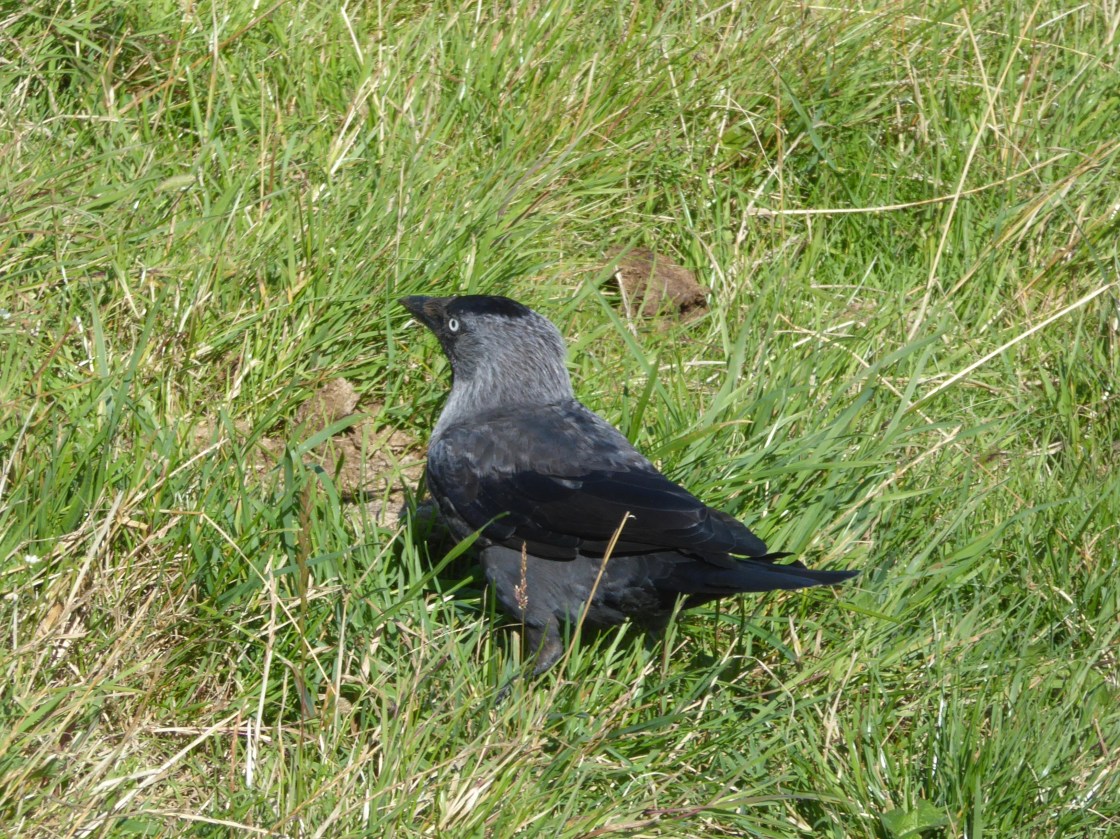
I’ve written about jackdaw and other corvids before because I am fascinated by them; from where I am working I can lookout into the garden and see them. at the moment there are a lot of young families of jackdaws, and the little ones are so funny and it is so interesting watching them learn things.
Further down the road from us is a family of young birds who seem to be without their parents, but they have adopted a seagull as their mother. The seagull doesn’t seem particularly interested in them, but doesn’t do anything to discourage her five foster children. She will come down to pick up some scrap and the young birds will follow her and hop about, not really sure what to do. If the seagull flies back up to a roof, after a while they will all fly back up to be with her. I worry about them and cars because they have no clue about how dangerous they are or how quickly they move, but so far all seem to have survived.
Jackdaws can be found across most of the British isles except the west of Scotland, and are passerine birds, which means that like most birds they belong to one particular order, the passeriformes… and one characteristic which birds of this order share is the arrangement of their toes, one backwards and three forwards so they can grip onto things like twigs and branches. originally they were just called daws, jack was attached meaning ‘male’ as Jack was the diminutive of John the most common English male name… as in jackass and jack snipe.
The bird in this picture was not in our garden or along the road, but up on the hill, walking through the grass no doubt looking for lunch!


 Lois Elsden