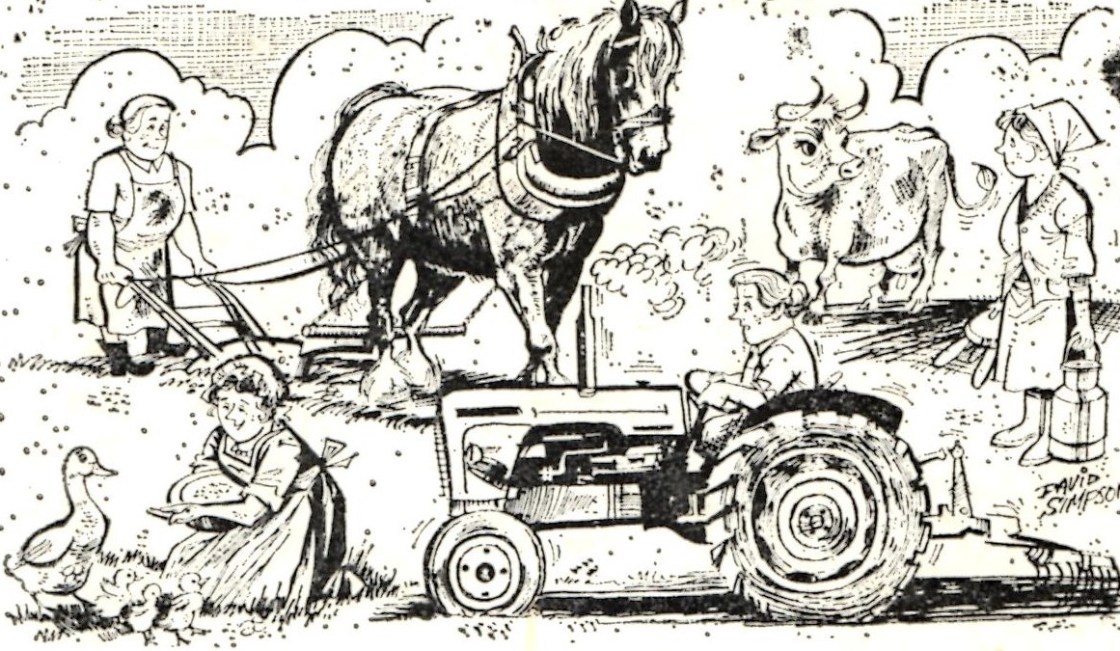
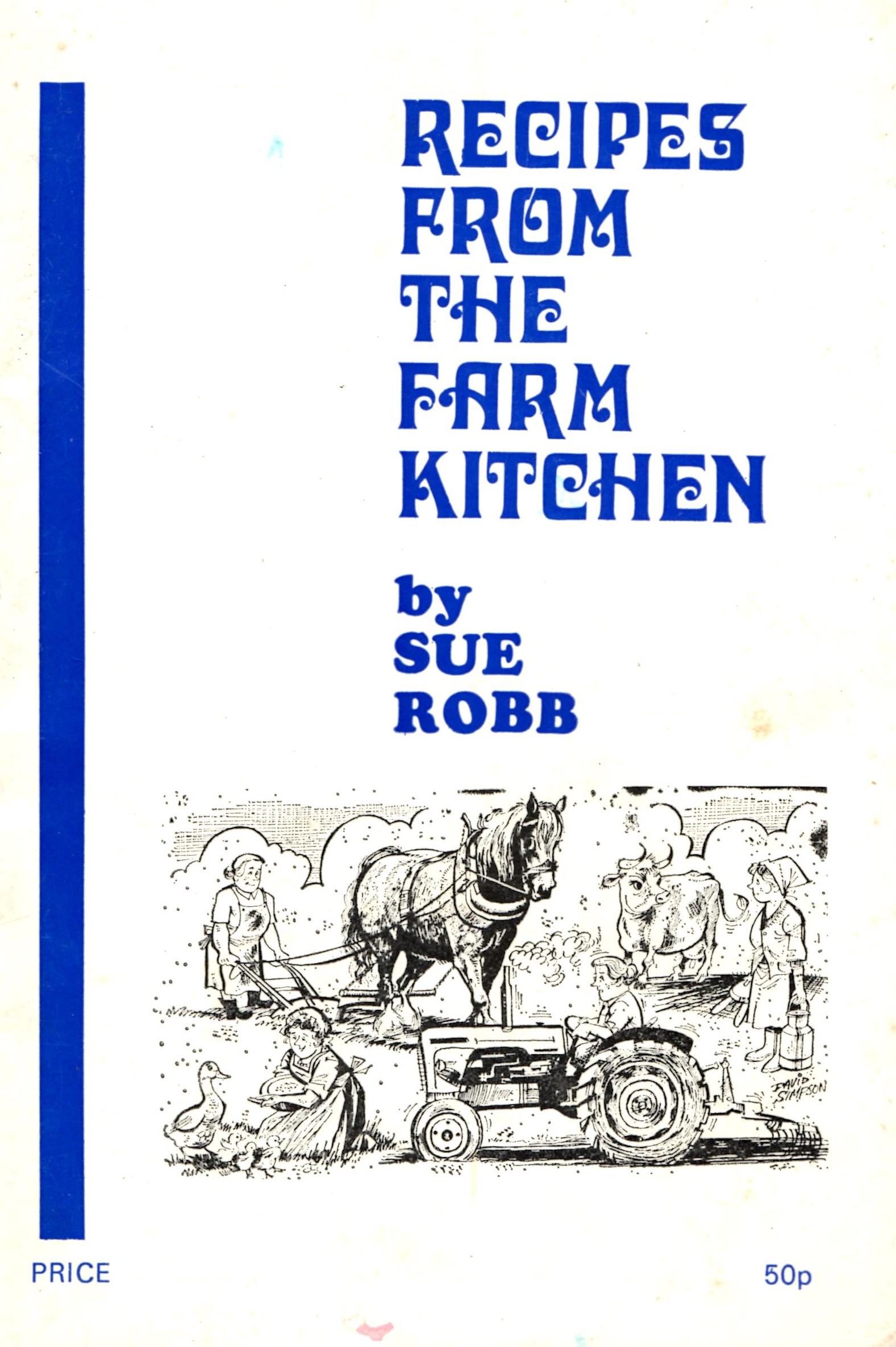
Second-hand book shops are like a magnet to me, and whenever I go in one I always end up at the cookery book section, looking particularly for old cookery books, including little booklets and pamphlets written to raise funds or as a collection of recipes from some organization or group. While we were in Coleraine I found several of these little gems, including ‘Recipes From the Farm Kitchen’ by Sue Robb.
Sue Robb was born in County Down and I believe wrote a cookery column, the Farm Kitchen, in a newspaper for many years; she was obviously highly respected and well-thought of but I cannot find out any more about her or her column. her little book, ‘Recipes From the Farm Kitchen’ is not only full of recipes as you might imagine, but little stories of life gone by. here is an extract from the introduction:
Since the days of the great famine, farmers’ wives have been the greatest exponents of improvisation and of knowing exactly how to make the best use of home-made produced ingredients. They can provide potato soup or vegetable stew as a satisfying and economical main course. The soup, flavoured with onion and turnip, blended with milk and garnished with parsley was, in the days when meat was seldom eaten, a food well-suited to the solid digestion of Irishmen. Served in blue-ringed bowls and salted from the salt box that hung on the wall beside the fireplace, it helped to put brawn in the arms, shoulders and legs.
… They had home-cured ham, boiled or fried to eat with their own pickled cabbage. bread was baked in a variety of flavours… the wheat for the big farls was ground in the barns and thick sour buttermilk produced bread as light as a sponge cake. Boiled potatoes were put through a masher or clamped down with a beetle, seasoned and made into more bread, baked on the black iron griddle. oatcake was upended and dried out at the back of the range.
A heat testing gauge was unknown. They used the open hand, dropping it lightly on a warming griddle until they knew it was time to start making the bread.
For those who burned peat on the fire, soda bread, with sugar and sultanas added, was baked in a three-legged pot on top of red hot embers. Covered with a lid, this bread had a perfect texture…
Doesn’t it conjure a wonderful image? Mrs Robb is writing about Ireland, but I am sure there were similar kitchens in Wales, Scotland and Ireland. I’m sure in many rural communities ordinary people ate vegetable soups and stews when they couldn’t afford meat; peat may not have been used everywhere but food would have been cooked over open fires, bread baked on griddles, and the three-legged cooking pot standing in the embers. Farls are delicious unyeasted breads raised by baking powder or bicarbonate of soda, hence soda bread, sometimes made with potato, and usually cut into four pieces. A beetle is a wooden mallet or masher for potatoes and other vegetables.

 Lois Elsden