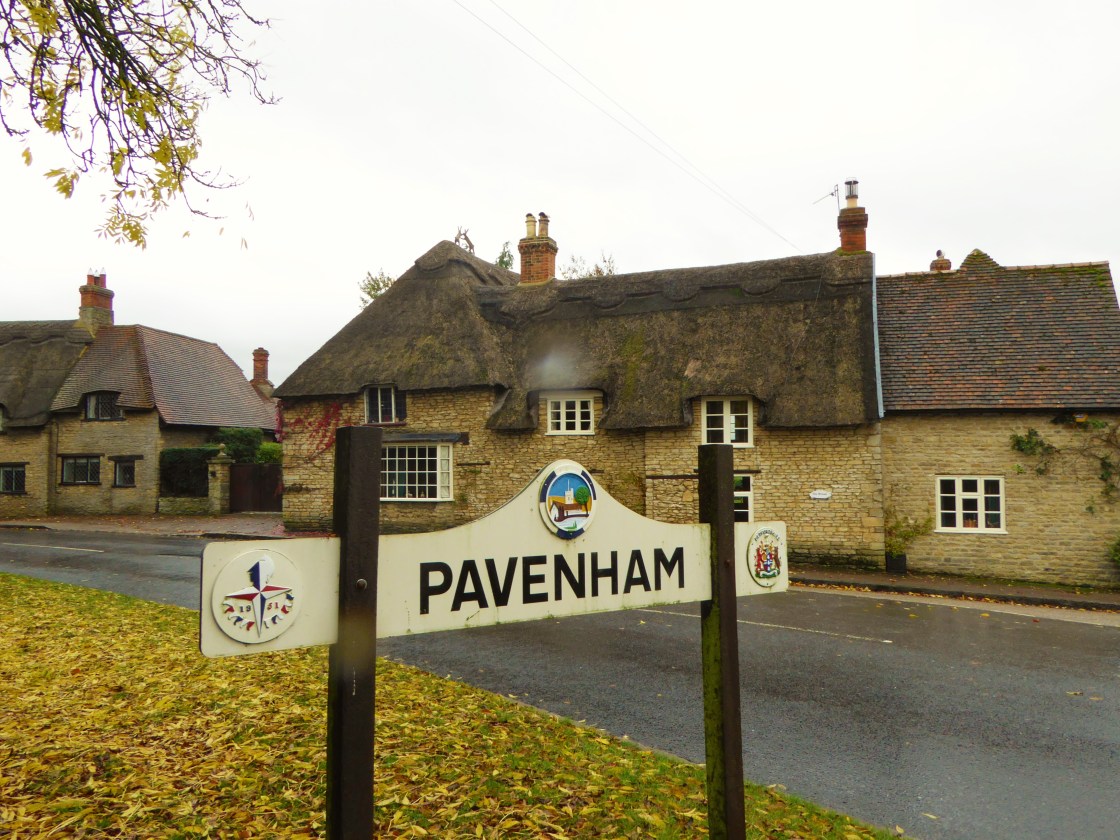
My mother lived in Pavenham in Bedfordshire as a child, in an old cottage with a thatched roof and a pump in the yard. I don’t actually know which cottage it was, so when we visited recently we just wandered around enjoying looking at the interesting old buildings.
I had hoped there might be a post office or village shop where we could buy a guide…
 This attractive place with the very small door was once the village post office, but no more. I guess it would have been open in the 1920’s when my mother and her parents, sisters and brother moved here.
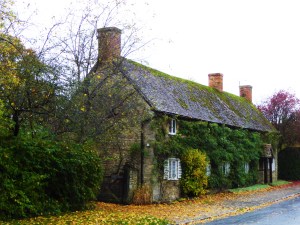 Although many of the cottages and properties are thatched, some are tiled, and my cousin whose family once lived in a thatched cottage said it was much preferable! A thatch may look pretty and attractive, but apparently there is a continual fall of dusty material, there are lots and lots of bugs and insects and there were sinister scuttlings and gnawing noises from above!
Pavenham is one of the oldest settlements in the area, and by the time of Domesday there were three manors; it is situated on the River Ouse, and its main industry for centuries from the 1600s was to do with rushes – the ordinary common bulrush. These were used as floor covering, not just strewn about as you often see in films, but plaited or woven into matting which was sold to large buildings such as big churches, cathedrals and even the Houses of Parliament. Other products were small domestic mats and floor coverings, baskets, horse collars, hassocks, furniture seating and backing and hats. Because they are a natural material rushes when they dry are a variety of colours, so the items which the weavers would have made would be most attractive as well as useful and durable.
The common bulrush which has the Latin name of schoeneoplectus lacustris has been harvested in Pavenham for hundreds years. Working to collect rushes must have been a miserable job for the most part; in the summer, wading often chest deep in the river, the cutters harvested the rushes which can grow up to 11 foot tall, using a ‘rush hook’, a long bladed, long-handled bill hook. The men didn’t return home at night, but slept in tents along the banks of the river. The cut rushes were tied together so they could be floated and punted down the river like rafts; the bundles of rushes were called boults or bolts, and the rafts were called rucks. Back in the village the rushes were spread out to dry before being used or sold.
My mother’s great-grandfather was a basket maker… I’m sure as well as the withies and osiers he would have been familiar with working rushes!
Here is a lovely site telling you all about rush harvesting today:

 Lois Elsden