I was busy writing and going back to check typos and those sort of mistakes you make when your brain works faster than your fingers, and I came across a word I was sure I had spelled correctly. Quite often, the spell checker reverts to an American English setting, so it tries to change ‘colour’ to ‘color’, ‘woollen’ to ‘woolen’ etc; it hasn’t ever yet tried to change ‘jelly’ to ‘jello’ or ‘jacket’ to ‘vest’ or any of the other words which are actually different in our supposedly common language.
I had written decrepid and was surprised it was wrong… I actually looked it up thinking maybe the spell checker had gone awry, but no, it was right and I was wrong… well, wrong-ish. Decrepid used to be ‘an alternative spelling’ for decrepit, but it gradually declined in usage in the early twentieth century, until by the 1930’s it was practically obsolete, and now decrepit is the correct way of spelling the word which means old and falling to pieces. it comes via French from Latin, from a word meaning to creak, which I guess it’s what old things do.
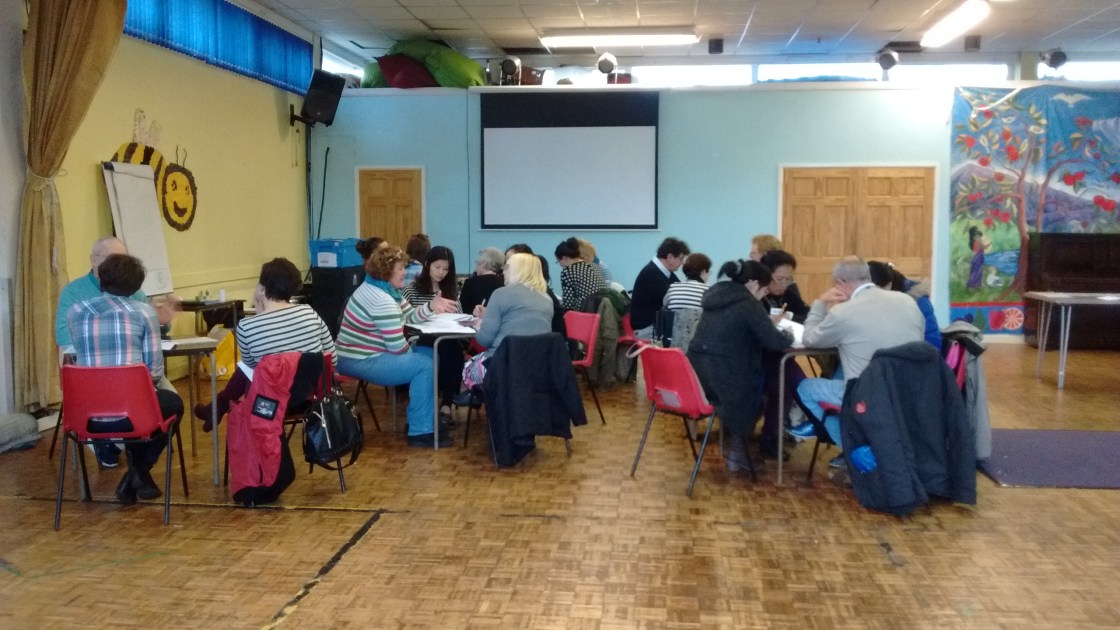
Coincidentally, today at our English Conversation class, we were thinking about and practising voiced and unvoiced final consonants… so having practised ‘t’ and ‘d’ at the ends of words so that they are audible but not over-emphasised – ‘put’ not ‘put-ta’ ‘had’ not ‘had-da’, the next thing was to go over again how words sound when the have an ‘ed’ on the end… and we used this model:
- The ‘id’ sound: – if the last letter of a word is spelled with ‘d’ or ‘t’, the ‘ed’ is pronounced as a separate syllable – ‘id’
- wanted (sounds like ‘want-id’)
- waited (sounds like ‘wait-id’)
- needed (sounds like ‘need-id’)
- folded (sounds like ‘fold-id’)
2. The ‘t’ sound – if the last consonant of the word is voiceless, then the ‘ed’ is pronounced as a ‘t’ but without any extra syllable or ‘id’ sound.
- talked (sounds like “talkt”)
- kissed (sounds like “kisst”)
- parked (sounds like ‘parkt’)
3. The ‘d’ sound – if the last letter of the words ends in a voiced consonant (or sound), then the ‘er’ is pronounced like a ‘d’ without any extra syllable or ‘id’ or ‘ed’ sound
- played (sounds like “playd”)
- jumped (sounds like ‘jumpd’)
- opened (sounds like ‘opend’)
- lived (sounds like ‘livd’)
Not easy to hear, pronounce or remember! Practice, practice, practice!

 Lois Elsden