I have only once set a novel in a real place, in Oldham where I lived for many years. Although the setting was a real place, I invented some extra streets, some pubs, a couple of schools, an old mill… I put them among real actual streets, and I had a map of the town which included these imaginary places. This meant I had to check certain things, how long did it actually take to walk between the real places, how many miles was it from the town centre to a location, what town centre shops might the characters go to? I wrote the story initially many years ago when I was still living there, but I edited it to bring it up to date to publish it… the only trouble was, some of the real places I had originally mentioned had disappeared, and since publication the whole town centre has been revamped and major landmarks have vanished!
In my imaginary setting for my other novels, it is up to me how long it takes to get from A to B, if I need a church, I invent one – in the novel I’m writing at the moment there is St Spyridon’s church in my fictional town of Strand, if I need a pub I can pop one in – I wrote about the Orange Tree several books ago, and now it is a favourite place for my characters to go if they are in town!
In my latest novel, which I hope will be published in the new year, my main character visits somewhere he hasn’t been before…
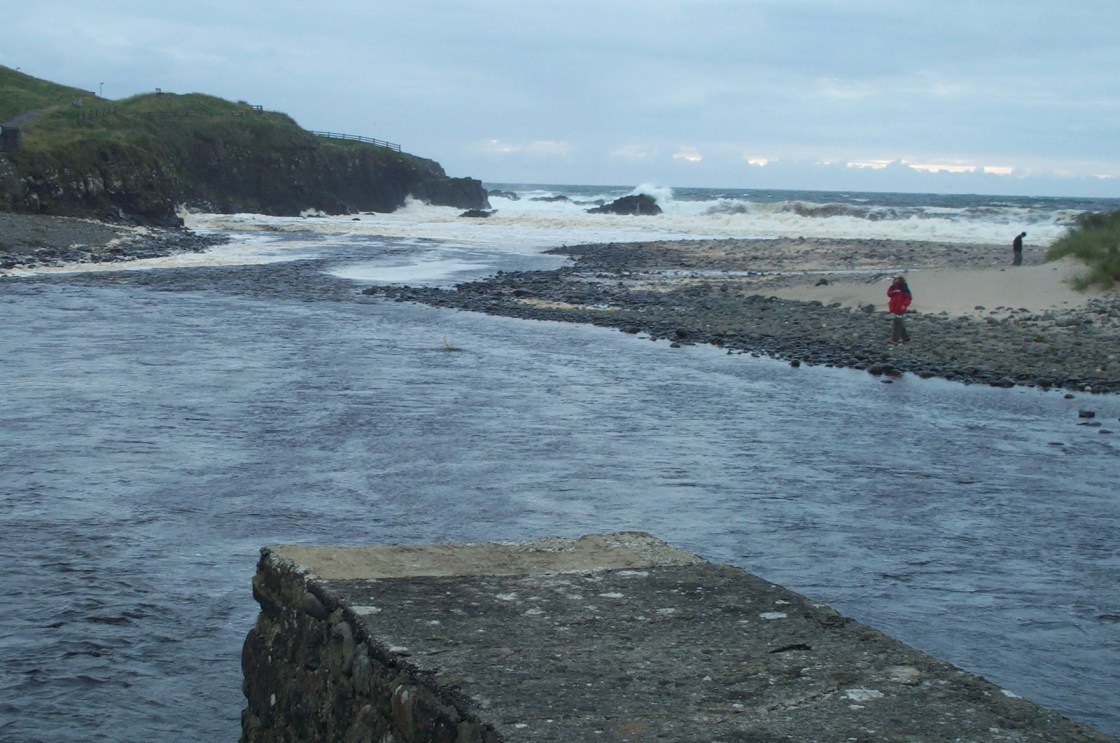
We drove on and Hollis directed me to turn off down a very narrow and neglected lane, barely more than a footpath and told me to manage on my side lights if I could. He had me pull in at a farm gate and told me to turn round here and park facing back up the track and I couldn’t help but feel it was in case we had to make a swift getaway. Neither of us spoke as we left the car, and I dithered whether to lock it, and decided not to, and we headed down as the light died, down towards the sea.
I could barely see but followed Hollis, a dark shape in front of me who seemed to be able to see in the dark because he moved sure-footedly, leading me across a field, over a style and then we were in sand dunes and at last were on the beach.
The moon was a ghostly galleon… where did that come from? I was going to ask David but he led me along the lee of the dunes. The sea was quite near and quite rough tonight, I could see the white of the waves rushing up the sand and then sweeping back then coming again. It was quite exciting!
My experience of beaches was confined to our little bay in Easthope , the walk along to Opal Harbour and bits along either side; considering I had lived in the area all my life, I didn’t know much about the area. There was a dark patch ahead and as we came up to it I could see it was a river flowing into the sea, just as the River Hope did further back. Similar to the Hope, this river had a footbridge across, but on the other side I could make out walls, like a little harbour.
We were standing against what might have been an old fisherman’s hut of some sort, made out of the local stone but pretty much of a ruin as far as I could tell.
“The River Wid,” Hollis told me in a low voice. “The little harbour over there was Widmouth Quay… the village is long gone…”
When he gets home, Thomas tries to find out more about the place:
… I looked up River Wid and Widmouth Quay… the name comes from the old word for ‘willow’ apparently, and rises as a spring which flows through a series of pools; there was once a several water mills along its course but then during a terrible flood the river changed course and the mills were abandoned… although some other information I looked at said the river had been diverted by some landowner but it didn’t say what happened to the millers…
The River Wid passes the site of a Roman fort apparently, and a burial mound and then even goes underground for a while before ‘emptying’ into the sea at Widmouth harbour. I can’t find out much about the harbour except that originally it was developed to ship lime stone out, but the river and the tides and access to it from the main roads caused it to be abandoned a hundred or so years ago. Opal Harbour became the main fishing harbour, and that’s difficult enough to get you with the wiggled windy road down to it.
Widmouth was also a coastguard station at one point but now the buildings there were private residences….
Widmouth Quay is purely imaginary… it may be an amalgamation of various places I have been which have inspired me, but nowhere is exactly like it!
If you haven’t read ‘Flipside’ my novel set in Oldham, here is a link:
… and if you haven’t read my other novels about imaginary places…
http://www.amazon.co.uk/s/ref=nb_sb_noss_1?url=search-alias%3Daps&field-keywords=lois+elsden

 Lois Elsden