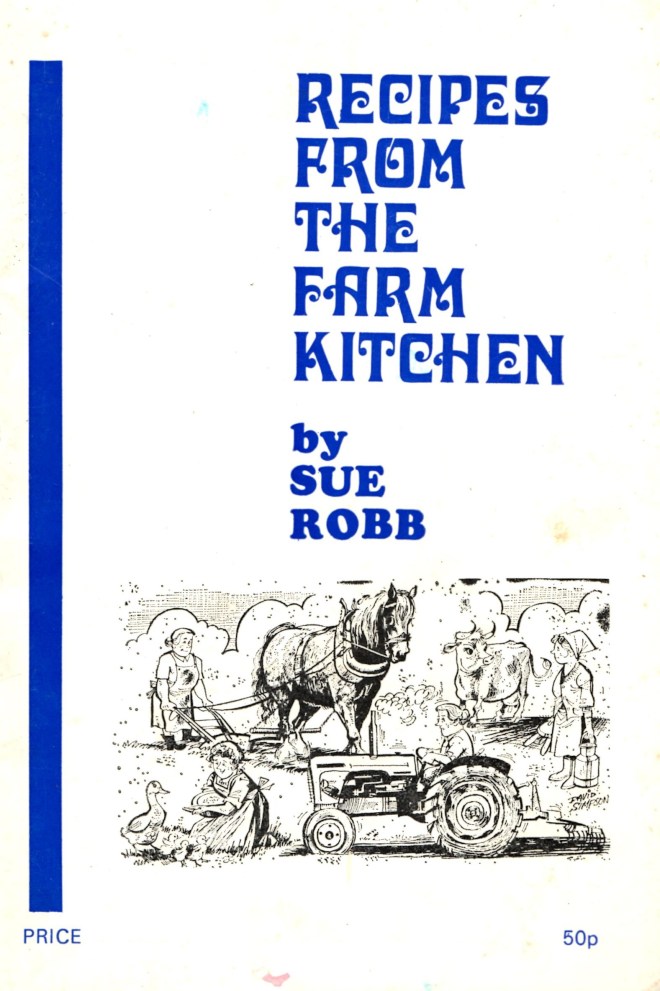
I started the story of an impoverished old country woman the other day; written by Sue Robb and published in her little cookery book, Recipes from the Farm Kitchen, Mrs Robb described an elderly old woman who must have been similar to so many old folk before the support of national health and social welfare programmes. Mrs Robb is clearly of the opinion that those such as old Kate were better off being independent and alone to struggle to find food and shelter, that her freedom to do as she pleased and live as she pleased was better than being under the state’s ‘control of people like her’… However, I feel that for every old person who managed and survived like Kate, there were far more who struggled and suffered from cold, neglect and hunger, and probably loneliness too.
She wandered the fields in all weathers, an old open work black shawl over her head and trailing several tree branches behind her. I would not have been one bit surprised to see her climb astride and sail over the hedges, a perfect reincarnation of the broomstick witch. “You must come out and talk to folk” she used to say. “Nobody will come and talk to you.” With the state of her habitation this was hardly surprising. “When I need a new ‘shift'” she told everyone. “I get two big wheat meal bags and take them apart. Then one of the fellas (her children were all boys) gets me to lie on the floor and he draws round me with a stick.” The floor was earthen. “He cuts the shape and I sew it up. It keeps me warm, lasts for ages, and never needs changin.”
It’s a blessing she died before the Welfare State took control of people like her. She did not want free milk – she had that from two goats. She did not need a Health Visitor, because she was never ill and was over 80 before she passed away. it was her proud boast that when her children were born in the morning, she was out that same afternoon, setting potatoes, tieing corn, or rucking hay with the baby sleeping in a rough made cradle.
It was simple people like Kate who helped brighten the days of hardship and simple living. Such people are alas no more and forgotten with them is a way of life completely unknown in this age of balanced diets, home helps, and clinical hygiene.We have lost so much in their passing.
I’m afraid I don’t have the rosy view Mrs Robb did of this ‘simple living’; for every tough old exception like Kate, there must have been so many, many more who struggled with the discomfort of poor housing in wet or cold or freezing weather, the effects of poor diets, and the conditions and illnesses associated with them, who couldn’t manage in their own homes without help, who suffered infections, skin diseases, and unpleasant sickness caused by poor hygiene and lack of clean water and good sanitation. We may have become too dependent, but I don’t think we have lost anything at all in the passing of this way of life.

 Lois Elsden
Didn’t need no welfare state. Everybody pulled their weight. Gee our old Lasalle ran great. Those were the days!
LikeLiked by 1 person