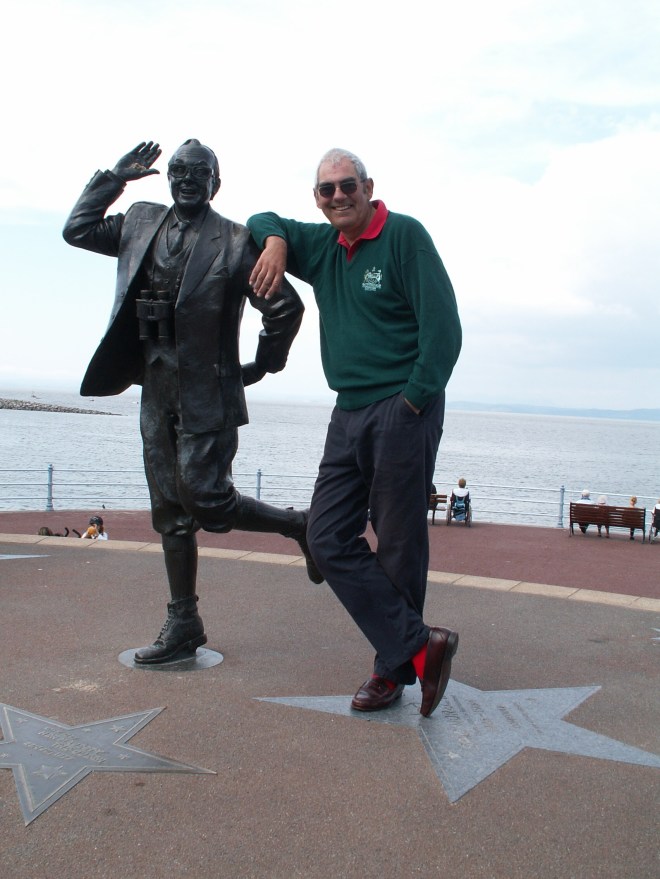
I was thinking about writing and about the English lesson rule of beginning, middle and end, when a sketch by Morcambe and Wise came into my mind. Eric plays a piece of music which contained ‘all the right notes, but not necessarily in the right order…’ Thinking about real life it’s sometimes difficult to think where the beginning of a certain thing started. Does a holiday adventure start when you look through brochures or go on travel sites? Does it start when you book your tickets, get on the plane, arrive at the hotel? Does a marriage start as the couple make their vows, or did it start with the proposal, the first date, the glance across the room, a decision to not do the same old thing as usual but go to a different pub?
That’s real life… when we write we can start our narrative where we want to, we can even begin at the end!
Ding dong bell,
Pussy’s in the well!
Who put him in?
Little Johnny Green!
Who pulled him out?
Little Tommy Stout.
What a naughty boy was that,
To try to drown poor pussy cat,
Who never did him any harm,
But chased the mice in the farmer’s barn.
This nursery rhyme doesn’t start at the beginning – the beginning is the cat keeping down the vermin, the setting is the farm barn. The event which leads to the rest of the action is Johnny (and I can imagine the nasty, spiteful little boy that he is) – is Johnny throwing the cat down the well. Fortunately for the cat, Tommy either saw Johnny commit the ‘crime’ or heard the cat, the alarm was sounded – the bell being rung, and Tommy managed to rescue the animal before it drowned.
The rhyme tells the story ‘but not necessarily in the right order’! The beginning is the action – the alarm! then some scene setting – the throwing of the cat into the well, then the hero comes to the rescue – hurrah for Tommy! and last of all is a reflection on the crime, and disapproval of Johnny, nasty little lad.
By rearranging the time-order in this simple rhyme, it becomes much more engaging… although I guess we”ve all sung it so often we don’t even think about the meaning any more! If I was going to write this as a story I would describe the two boys and I would imagine their characters. No child is born mean and nasty, so why is Johnny such a little beast? Has he been bullied? Is he unloved? Or maybe the cat once scratched him when he tried to stroke it and he is a vengeful lad? And Tommy Stout – is he a fat little boy, is he an unexpected hero, ringing the alarm bell and rescuing the cat? What happened next? What did the farmer say or do, and what about the farmer’s wife – was she the same farmer’s wife who cut of the tails of the three blind mice… Wait! I think my imagination is taking over now!
Playing with time when you’re writing is interesting for the writer, and it’s engaging for the reader.
Here’s a link to my books, I have scenes in them where they are out of time-sequence which I hope makes certain episodes more exciting – let me know what you think!

 Lois Elsden
My Mother used to say that some people were born with larceny in their hearts and I tend to agree.They are heading down the wrong road the second after their first breath. To coddle a criminal has the same results as flogging a dead horse!
LikeLiked by 1 person