I’m reading some very interesting and well written books at the moment, but what I’m lacking is a snuggle down to go to sleep book (which might actually keep me reading into the early hours of the morning if it’s very gripping) I’ve had to start rereading books I’ve read before, which is ok, except sadly some of those I thought were favourites now seem less than gripping. An example of a great but not snuggling book is ‘The Ship Beneath the Sea’ by Mensun Bound. is a maritime archaeologist and the director of exploration on the 2019 and 2023 expeditions to find the Endurance, the ship of Sir Ernest Shackleton (a great hero of mine) It’s his book ‘The Ship Beneath the Ice – The Discovery of Shackleton’s Endurance’, a mighty 400 page volume. Mensun Bound is a fascinating man, and his book is really gripping and interesting, but too gripping and interesting to be hurried through – and too heavy to comfortably read lying down!
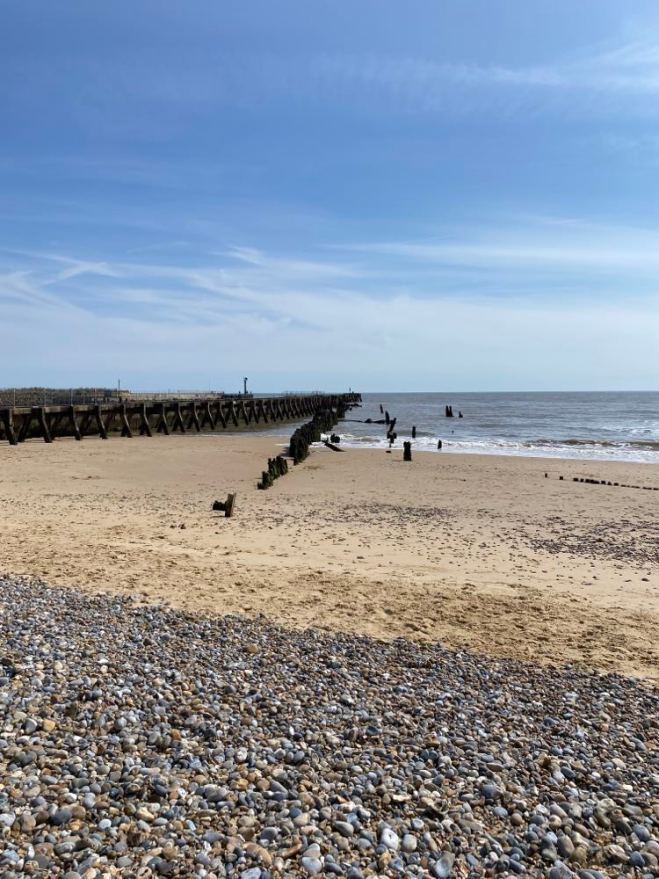
‘ A Flat Place’ by Noreen Masud is described on the cover by the Financial Times review as ‘Expansive, arresting and memorable… Masud is a significant chronicler of personal and national experience’. The cover drew me to the it in the bookshop, a flat, wet, sandy beach, stretching out towards the distant grey line of the sea, a view dear to me from my childhood at the east coast. When I read the blurb on the back, I was lost and had to buy it!
Morecambe Bay, Orford Ness, the Orkney Islands, the Fens. Scattered along the waterlogged edges of Britain are the flatlands: beguiling stretches of terrain where the horizon runs straight and unbroken, dividing stark ground from vast, vaulted sky. Out inn this flatness, the rules of physics seem to loosen. The eye plays tricks on the mind. Memories flicker in and out.
The flatlands are places of beauty and solace, and yet they are shaped and haunted by violence. Stubborn traces of conflict and colonialism silt their soil. Outsiders may not always be welcomed. In this luminous, radical memoir, Noreen Masud journeys through Britain’s flat places, grappling with their many paradoxes, reckoning with their uneasy histories – and her own.
I think this excellent blurb sums up the essence of this wonderfully written book – I was drawn to it by my own history of living in flatlands, but there is a biographical element which is the opposite of cosy. Masud is an excellent writer, and I want to appreciate her writing as well as the content fully awake and not drifting towards slumber. There are aspects which would not necessarily promote sweet dreams.
‘This Hollow Land – Aspects of Norfolk Folklore’ is written by Peter Tolhurst, and is a mighty tome:
For many the folklore of Norfolk consists of little more than the Swaffham Pedlar, Black Shuck and Babes in the Wood. Why is there such an apparent dearth of material? Were the old beliefs suppressed here more effectively by the new Puritan faith or, as Peter Tolhurst suggests, was it simply that Norfolk has had no folklore collector like Enid Porter in the Fens or George Ewart Evans in Suffolk?
In this absorbing work, the first of its kind devoted entirely to the county, the author has unearthed a rich legacy of beliefs and customs once widespread in the Norfolk.
It is actually a big book, which is perfect for its photos and illustrations, but also it is just a lovely book to have in your hands to read. Again – no good for reading in bed, I’d simply not be able to snuggle and read. I am fascinated by folk tales – and in fact I’ve written a couple of blogs about Black Shuck, Barghest and the local Devon legend of the yell or yeth hound, which probably gave Conan Doyle his inspiration for The Hound of the Baskervilles. I met Enid Porter (who’s mentioned in the blurb) several times as a child and then when I visited the Folk Museum in Cambridge as an adult.
So, I have plenty to read, but I’ve not much to read in bed… maybe I should re-read Agatha Christie!

 Lois Elsden