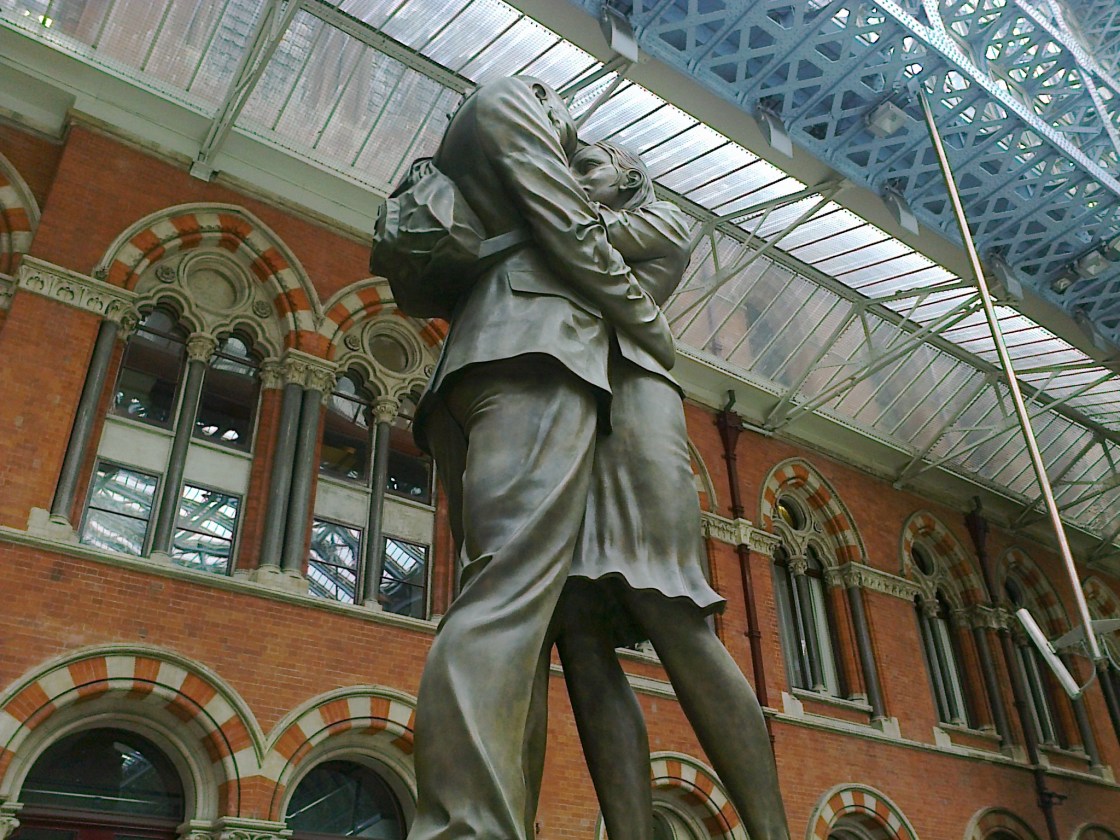
St Pancras Station in London was commissioned to be built in the middle of the nineteenth century, and it was designed by William Henry Barlow. It is the most amazing structure, and must have been a marvel at the time, and a wonder for the next 150 years. Apparently some bureaucratic vandal suggested knocking it down in the 1970’s can you imagine that? What crass ignorance; this station is a thing of beauty and wonder and a tribute to the enterprise, skill and art of engineers and constructors. I have been to London times without number but have never been here before as my trains always arrived at other stations. I will, however go here again, not to catch a train but just to spend time looking at this glorious triumph of the meeting of art, science and engineering.
The contract for the construction was of the station substructure and connecting lines was given to Messrs. Waring, with the Barlow’s assistant Campion as supervisor. The lower floor for beer warehousing contained interior columns 15 wide, and 48 deep carrying girders supporting the main station and track. The St Pancras branch ran below the station’s bottom level, in an east to west direction.
To avoid the foundations of the roof interfering with the space beneath, and to simplify the design, and minimise cost, it was decided to construct a single span roof, with cross ties for the arch at the station level. The arch was sprung directly from the station level, with no piers. Additional advice on the design of the roof was given to Barlow by Rowland Mason Ordish. The arches ribs had a web depth of 6 ft (1.8 m), mostly open ironwork. The span width, from wall to wall was 245 ft 6 in (74.83 m)}, with a rib every 29 ft 4 in (8.94 m) The arch was a slightly pointed design, with a reduced Radius of curvature at the springing points. The Butterley Company was contracted to construct the arches. The total of the 24 rib roof, and glazing was over £53,000, of which over half was for the main ribs. The cost of the gable end was a further £8,500.
The single-span overall roof was the largest such structure in the world at the time of its completion. The current record holder for this is the Dallas Cowboys Stadium in Texas, USA.
The materials used were wrought-iron framework of lattice design, with glass covering the middle half and timber (inside)/slate (outside) covering the outer quarters. The two end screens were glazed in a vertical rectangular grid pattern with decorative timber cladding around the edge and wrought iron finials around the outer edge. It was 689 feet (210 m) long, 240 feet (73 m) wide, and 100 feet (30 m) high at the apex above the tracks
The buildings fronting the station and the station hotel were designed by George Gilbert Scott an architect who produced some of the finest Gothic revival buildings in the world, including workhouses, asylums, churches, schools, libraries, town halls, public buildings, and memorials such as The Albert Memorial.
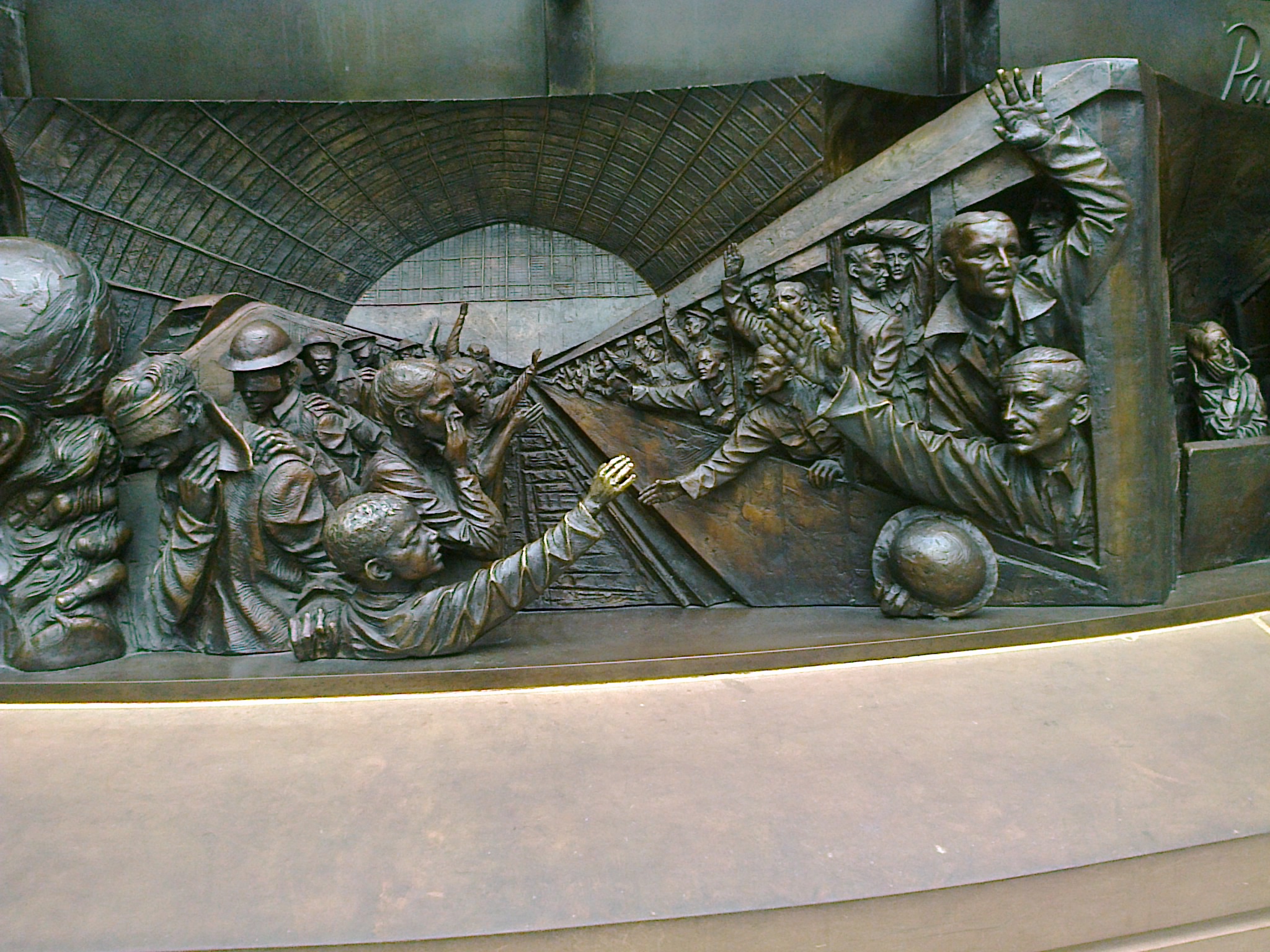
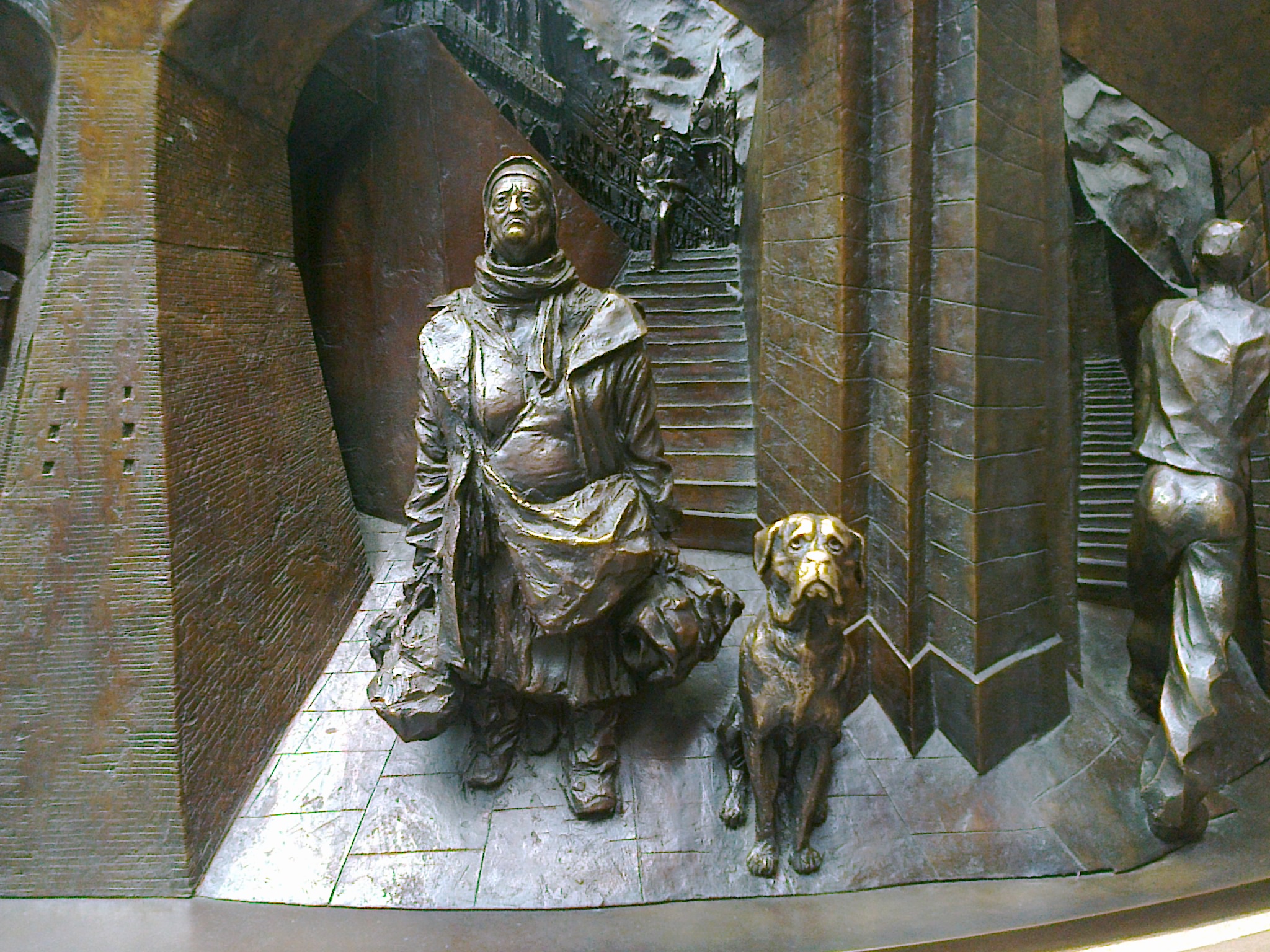
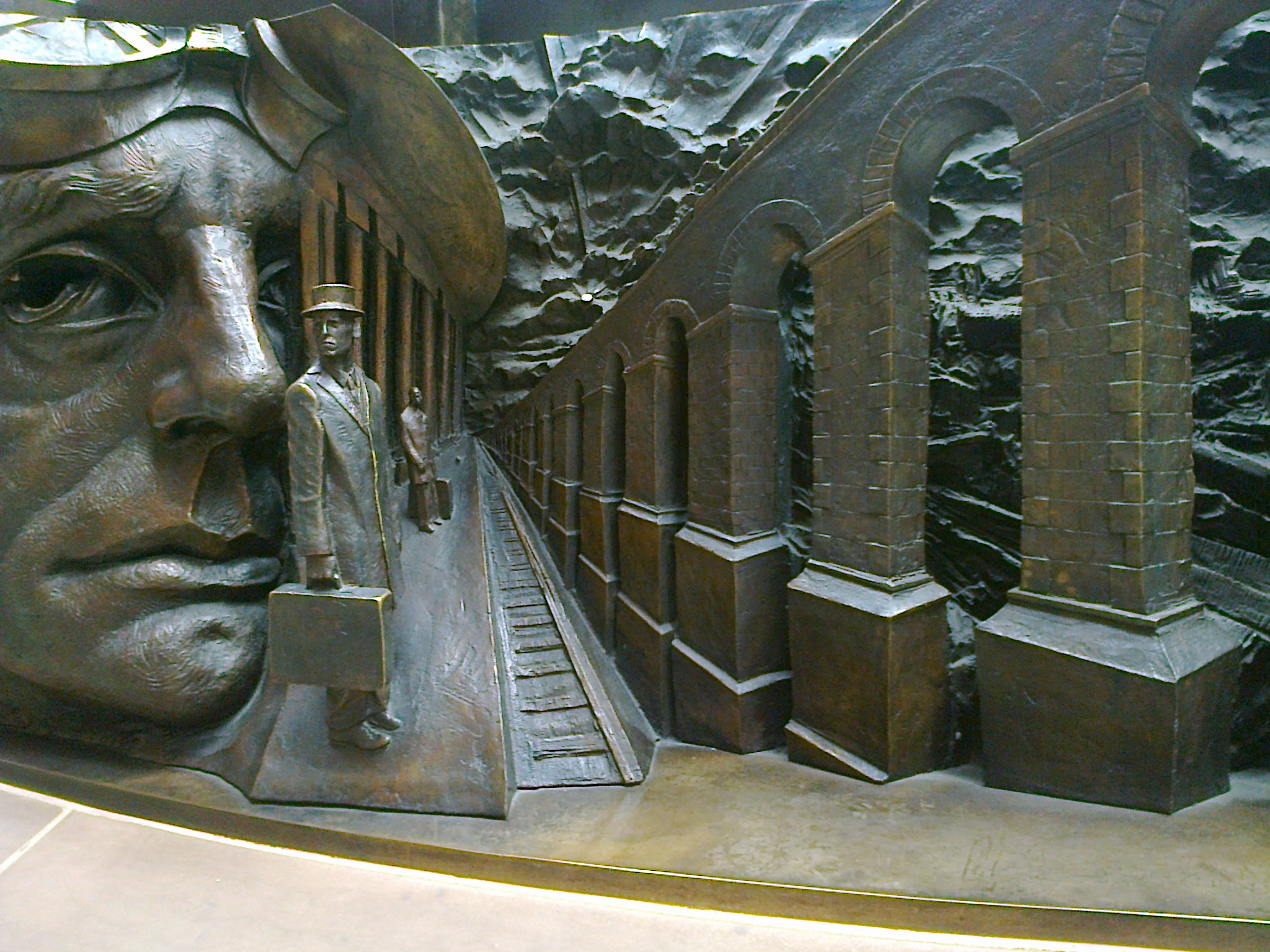
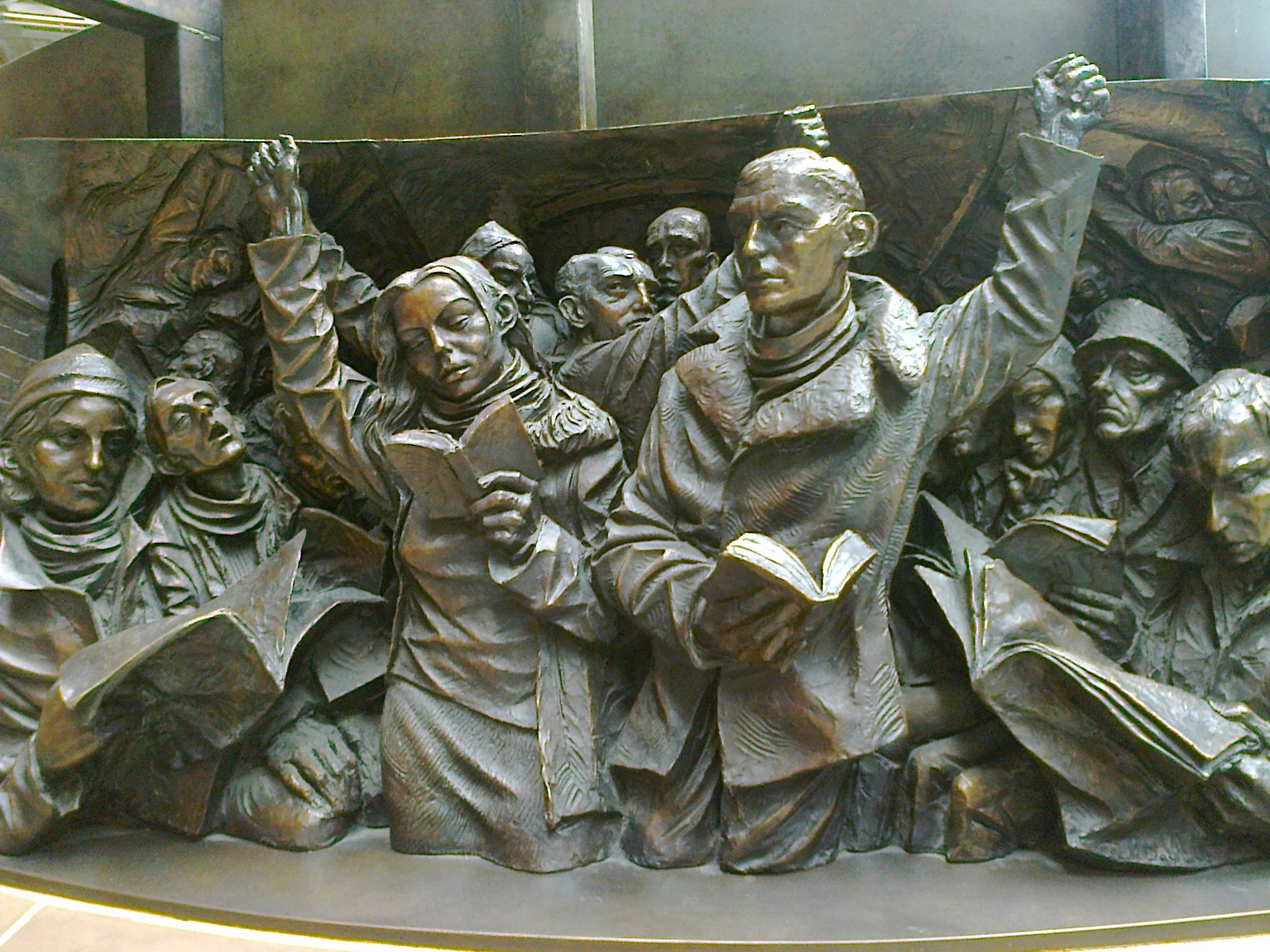
Within the station are a number of wonderful contemporary bronzes, including one of Sir John Betjeman who was passionate about architecture and trains as well as poetry, and a fantastic, almost awe-inspiring, 30 foot bronze statue by Paul Day called ‘The Meeting Place’ but known as ‘The Lovers.’ Round the huge base is a tremendous bronze frieze:



 Lois Elsden
We’ll be there tomorrow as we’re catching the Eurostar to Brussels at the biginning of a trip down the Rhine Valley
LikeLike
Lucky you! Have a wonderful time!
LikeLike