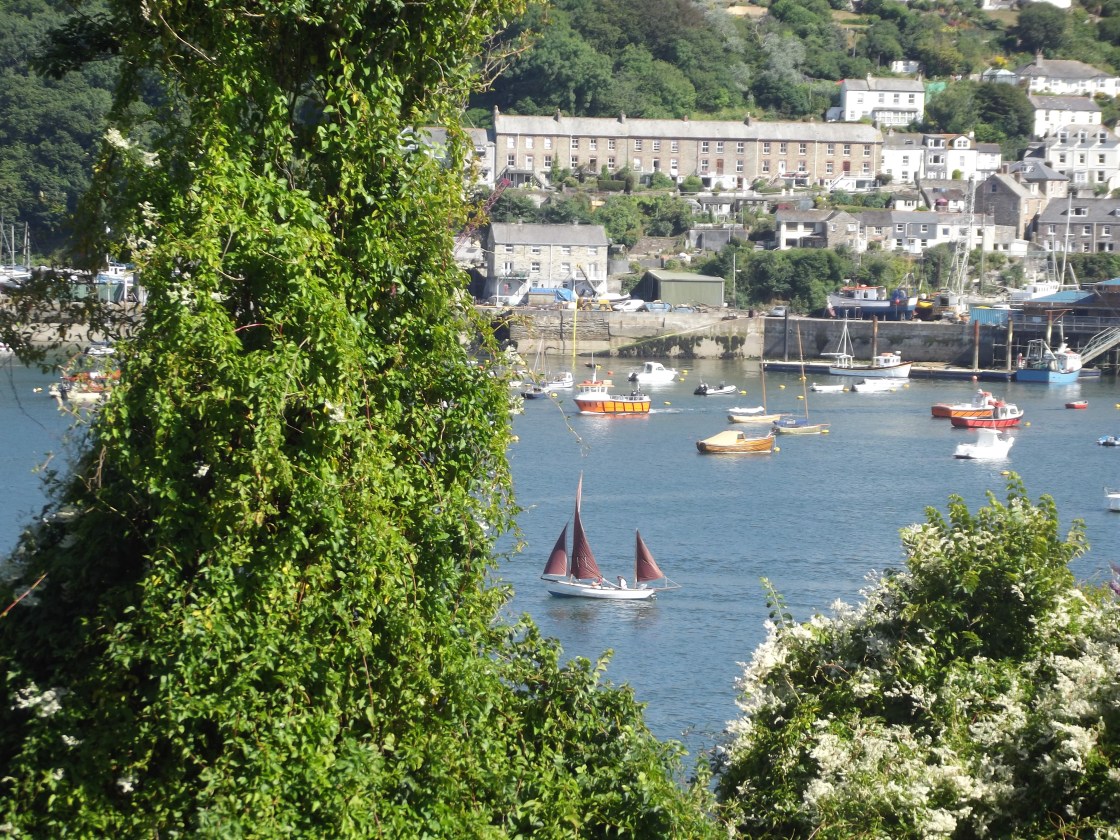
My husband has a very close connection with Cornwall, and although technically he wasn’t born there, he always thinks of Cornwall as being his native country, so it wasn’t surprising when he bought a book ‘A Glossary of the Cornish Dialect’ by K.C.Phillipps. This is not Kernewek, the Cornish language, although many dialect words must be rooted in this Celtic language.
It’s only a small book but packed with interesting information; the introduction is very interesting, explaining the history of the difficulty there was in the past with recording dialect words, partly because many of the people recording what Cornish people said were governed by Victorian ‘values’ so some of the more frank words and expressions were not recorded! The second chapter discusses spelling; most dialect is oral, and there has never been a codified way of spelling the words, phrases and idioms, however Mr Phillipps gives what he accepts are generalisations on the way words have been spelt and a guide to their pronunciation. He doesn’t use phonetic transcription, deliberately because what he has written is a different sort of publication. Mr Phillipps also gives a brief explanation of the grammar of dialect and a glimpse into the origins and connections with other forms of English. The last part of the beginning bit is about the different dialects in different areas of Cornwall; Cornish was the original language of the country, and English crept in from the north and west.
Useful, interesting and important as these introductory chapters are, the real fun comes with the glossary itself, and the following list of comparisons, of which Cornish has many! So here is a little alphabetical journey through Cornish dialect:
- apple-bee – wasp
- buddle – wash-tub
- conkerbell – icicle
- dabbered – muddy (clothes, legs etc)
- evil – four or five pronged manure fork
- flox – to spill
- gaddle – to drink greedily
- hepping-stock – mounting stone (for getting on a horse)
- iles – beards of barley
- joney – an ornament, especially a Staffordshire figure
- kewney – rancid or mildewed
- lewth – shelter
- milkey-dashels – roots and leaves of dandelion
- nuddick – neck
- oozle – throat
- peeth – a well
- quilkin – frog
- rigs – fun and frolics
- smeech – smell of burning, or any nasty smell
- totelish – mind wandering especially in old age
- urts – wortleberries, bilberries
- vizgy – a digging tool, combination of a mattock and small axe
- want – mole
- yafful – hand/armful especially of hay
- zam-zoodle – half-cooked
Marvellous,aren’t they! If you are interested the little book is available on Amazon:

 Lois Elsden
I’m interested in this as firstly I love languages and secondly while I’ve been doing my family research I’ve discovered that one branch of the family were copper miners in St Cleer in Cornwall who when the mine clos4ed came to the north west first to work buiding the railways and subsequently in the cotton mills. They moved from Cornwall between 1871 and 1881 and settled in Todmorden first, mother, father and 9 children plus the widowed grandma all in a small terraced house. The house is still standimg, though I doubt if there are 12 people living there now.
LikeLike
People in the past travelled around much more than is often thought… quite a journey from St Cleer to Todmorden, especially with all those children… it must have seemed like moving to a foreign country.
LikeLike
Well, actually, I have aq friend who is married to a Cornishman and he says thar when they were children they used to talk about going to England when they crossed the Tamar. Everywhere but Cornwall was a foreign countrey.
LikeLike
I must tell Bari that… he thinks of himself as Cornish even though he wasn’t actually born there, he spent his childhood in Fowey.
LikeLike
There was an article in today’s Guardian about a book which I think might be of interest to you. It’s called “Authorisms: Words Wrought by Authors” by Paul Dickson, published by Bloomsbury and available for £11.99 from guardian.co.uk/bookshop. You van probably read the article on the website too.
LikeLike
Thanks! I’ll have a look!
LikeLike