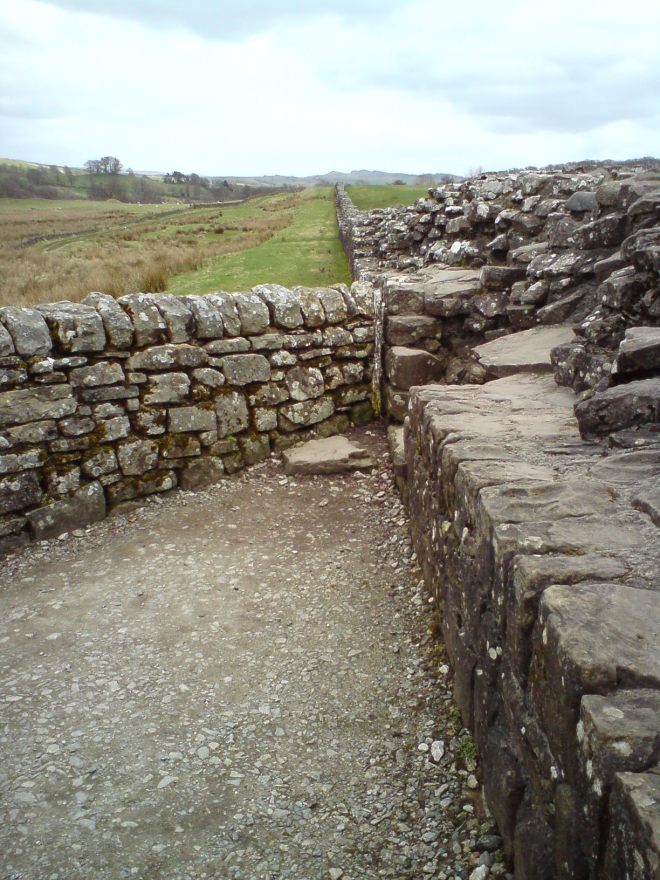
I’m nearly halfway through my course on Hadrian’s Wall; it is a MOOC (massive open on-line course) run by Newcastle University and it is really interesting. It’s and archaeological course, and obviously much of the material we are looking at and reading about is to do with the Roman soldiers who were stationed along the wall, and the life they lived there. However, what is in a way more interesting is the different perspective we are offered on what most of us would generally just take for granted.
I guess most of us have an image of what life was like along the wall, a desolate place, dreadful no doubt in winter, with soldiers who may have come from anywhere in the empire to serve their time guarding this far outpost. I guess we would imagine life to be tough at certain times, attacks from the ‘barbarians’, and we might also imagine that in between the battle bits, life might be much the same as anywhere else in the empire. The soldiers would buy and trade with locals, be provisioned by them, have them as servants and slaves, maybe marry local women and have families. All the time, I guess we would think of the fortresses along the wall as the place of safety, where these hardy men could retreat to when they were under attack.
Professor Simon James from the University of Leicester offers a different view; maybe the forts were to contain the soldiers, ‘wolf cages’ as he describes them. Initially I thought it meant that the forts kept the soldiers under control and prevented them from going out looting and preying on the local villages and settlements; however, many of the soldiers actually didn’t want to be there at all. Soldiers would desert, riot, and even mutiny.
I mentioned in a post the other day of looking the other way, of looking at something differently or maybe not even looking at it all… wolf cages… to keep the enemy out, or to keep the soldiers in?
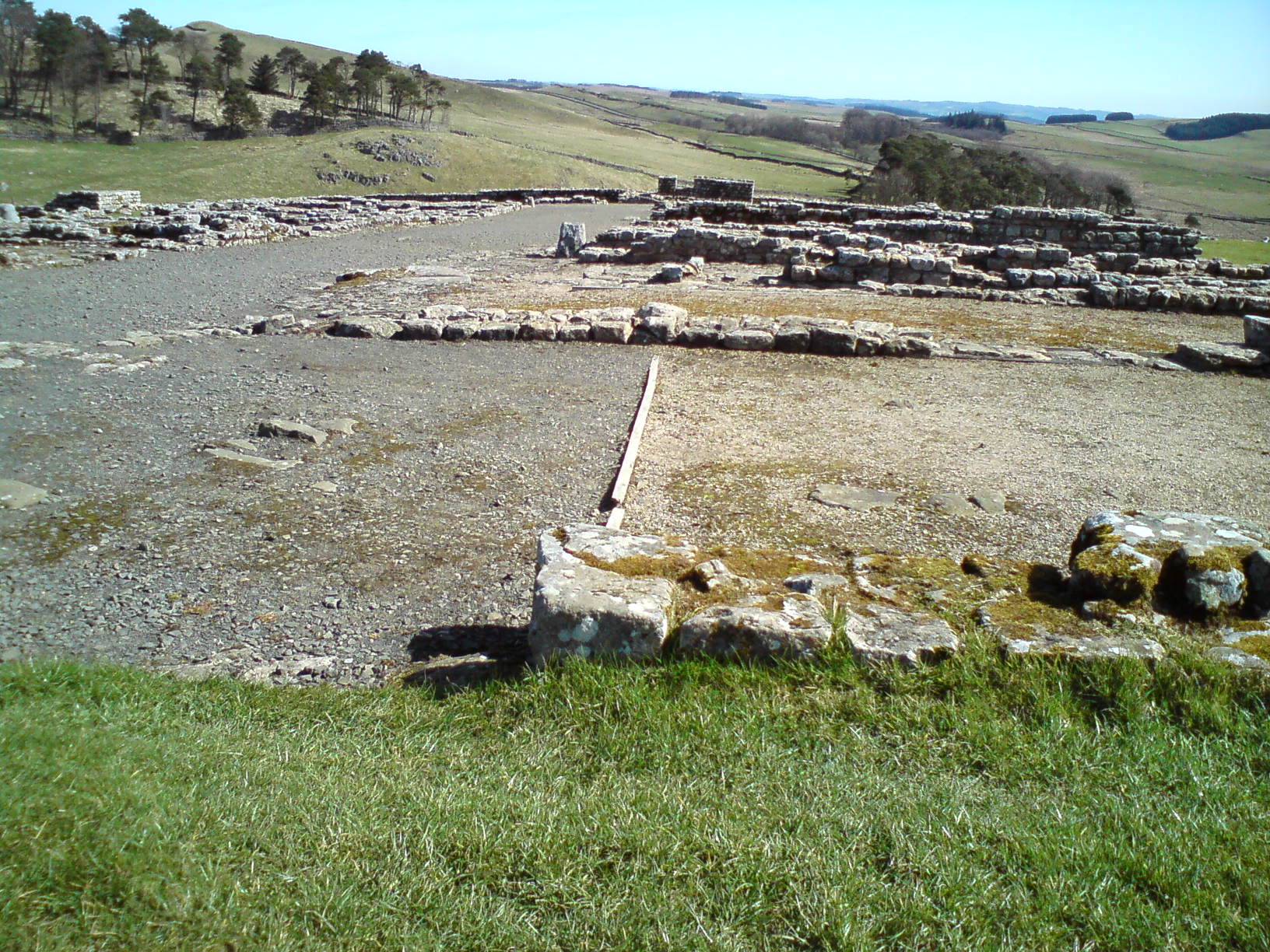 On Hadrian’s Wall

 Lois Elsden
How interesting. I had heard that the climate was very different back then and that they grew grape vines up on the Scottish borders.
LikeLiked by 1 person