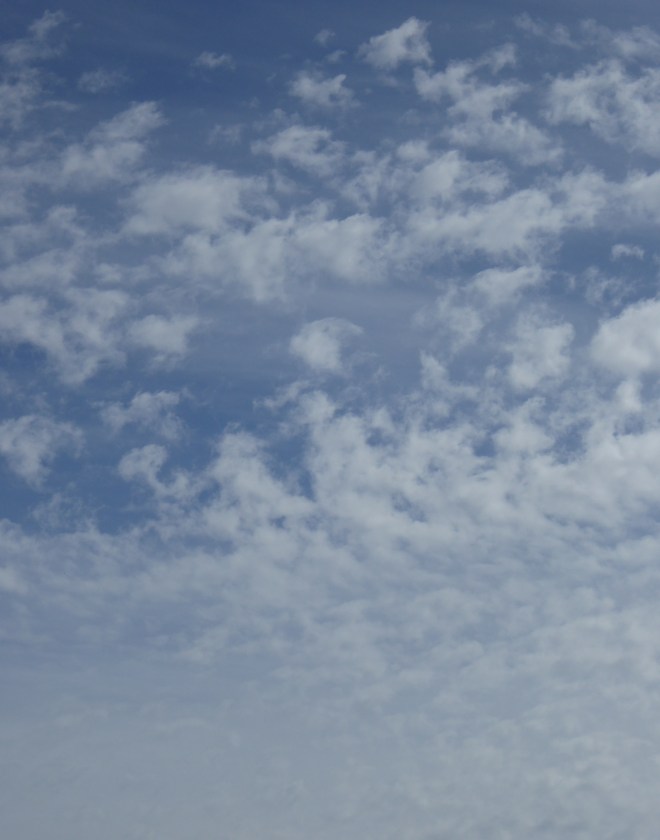
Clouds look so wonderful, and every child must imagine them as something tangible like a big ball of cotton wool, so how disappointing that they are just like different shaped examples of what we might experience on the ground as mist or fog…
Wikipedia describes them thus: “in meteorology, a cloud is a visible mass of liquid droplets or frozen crystals made of water or various chemicals suspended in the atmosphere above the surface of a planetary body. These suspended particles are also known as aerosols and are studied in the cloud physics branch of meteorology”.
If you’re not interested in meteorology or the physics behind clouds, it really doesn’t matter – you can still be fascinated by them, and enjoy watching them, and look at different shapes and formations. There is a Cloud Appreciation Society, and there are cloud spotters’ books and guides, and also tick off lists to complete as you see different types of cloud, different physical forms; there are different species of cloud and different varieties of cloud, and accessory clouds with supplementary features, mother clouds, stratocumulus fields and the curiously named vortex streets.
I don’t know if such things are taught in school any more, but when I was at school we were taught the main different clouds, and had to draw pictures of them in or exercise books. They were in three groups, high, medium and low clouds: cirrus, cirrocumulus and cirrostratus; altocumulus, altostratus and nimbostratus; stratocumulus, stratus, cumulus and cumulonimbus.
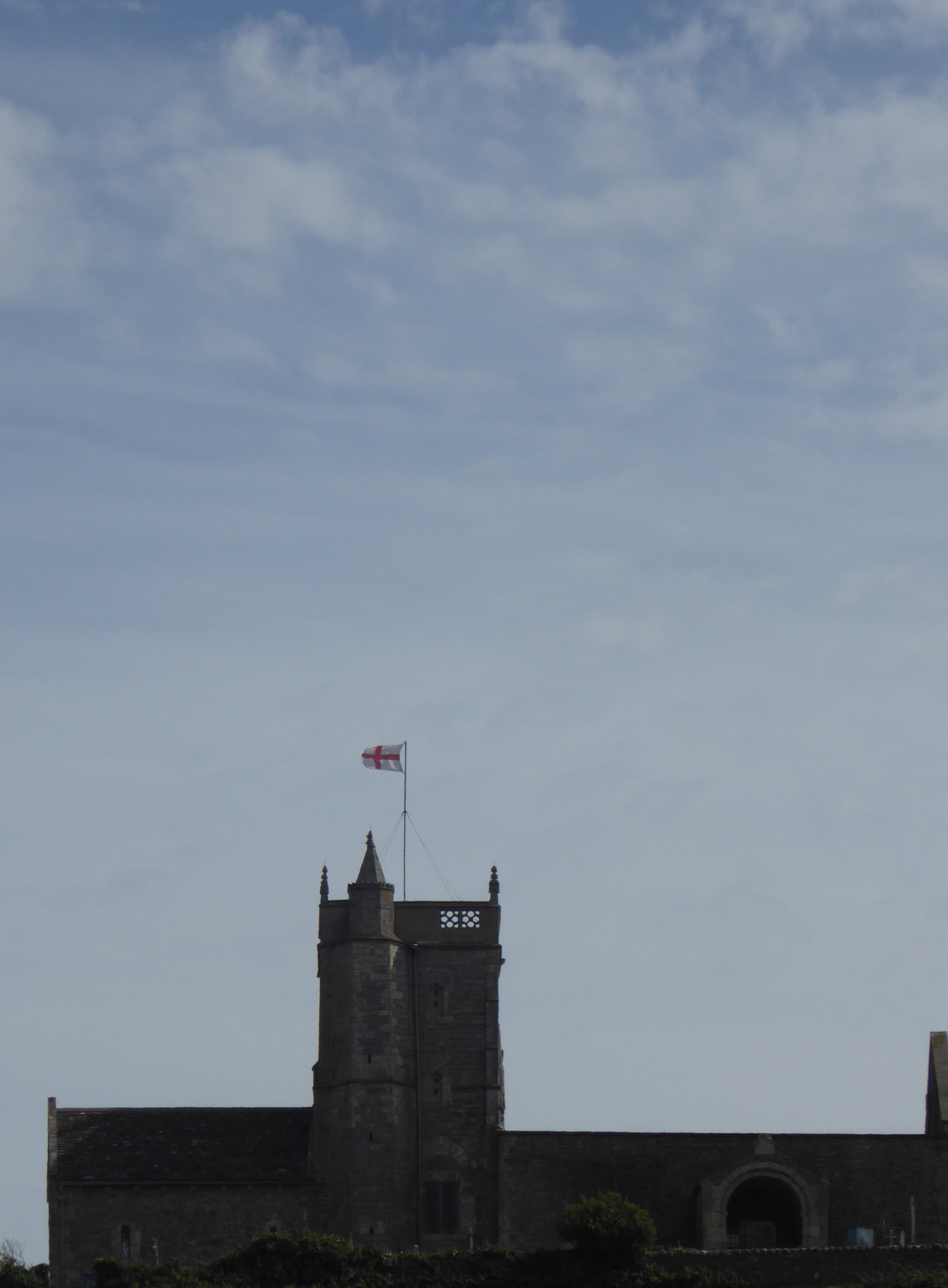
I’ve forgotten which is which now, but living by the sea as we do we see some wonderful examples. I don’t always think to take a photo, and photos never look as good as the picture in the sky, but here is a photo of the ruined church upon the hill beneath a lovely sky.
…cloudy…

 Lois Elsden
Then there’s my two chums Cloudy and Partly Cloudy. Remember?
LikeLike
Are they related to Scattered Showers?
LikeLike
It’s clouds illusions I recall. I really think I don’t know clouds at all. Joni Mitchell.
LikeLiked by 1 person
Cloudy, the sky is grey and white and cloudy – sometimes I think it’s hanging down on me… New Seekers
LikeLike