
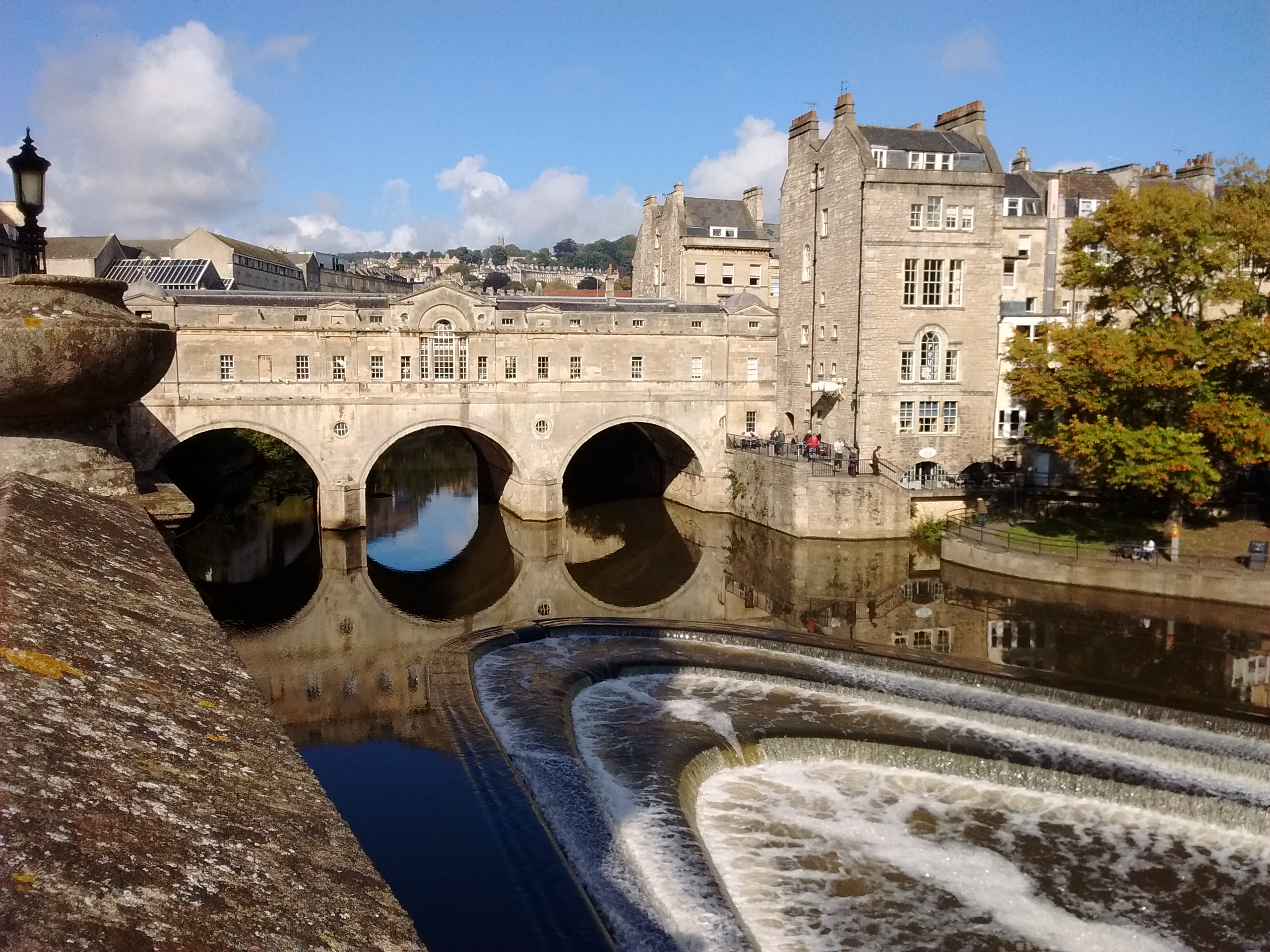
The River Avon runs through the city of Bath; it’s crossed by the famous Pulteney Bridge, one of only four bridges in the whole world with shops across all spans and both sides. The bridge was completed in 1774 and is still a most attractive and elegant piece of engineering and architecture. There are four other River Avons in England, and three in Scotland, but this River Avon rises near Chipping Sodbury and flows into the Severn estuary at Avonmouth.
However, the river enters Bath from the west, passing through the old industrial area of Locksbrook. In former times the river like most other waterways was used as a main transport route; at first there would have been river boats of various descriptions, but come the eighteenth century and the age of the canals and barges, part of the river was properly maintained as a ‘navigation’ for a more organised and efficient system.
There had been weirs along the river for generations, and there were at least 30 water mills between Bristol and Bath; however, the boats could only move when there was a high tide. The river between Hanham and Bath was opened developed and on the Avon Navigation were six locks to control the tidal river and move boats and their cargoes uphill and upstream to Bath.
The first barge sailed upstream from Hanham in 1727, however it was nearly a hundred years later that the Hanham lock became the first of more than a hundred on the Kennet and Avon Canal, which extended to London.

 Lois Elsden
Avon comes from the Welsh word afan (pronounced avan) which means river. So River Avon is River River. And Afan Can is River Song. Whovians get everywhere 😁
LikeLike