I don’t know if you do this – it’s a little on-line quiz, called Quiz Planet, three rounds of three questions each, and the winner of each round chooses the next topic. It’s played one on one, and quiz topics are varied – geography, politics, celebrities, animals, body and soul, music – and many more. I play against seven or so friends, and it’s fun and I’ve found i do learn little odd facts I may not have come across before. I’m fairly confident with some such as history, literature and geography, and less so with others such as sport and technology. I thought I was quite good at answering food questions – but came across one which I got wrong. I thought I’d not heard of the answer before – but shock! Horror! Shame! Not only did I know (or once knew) the answer, I’d actually written about it here – not once, but twice!
The word was entremet, and this is what I wrote:
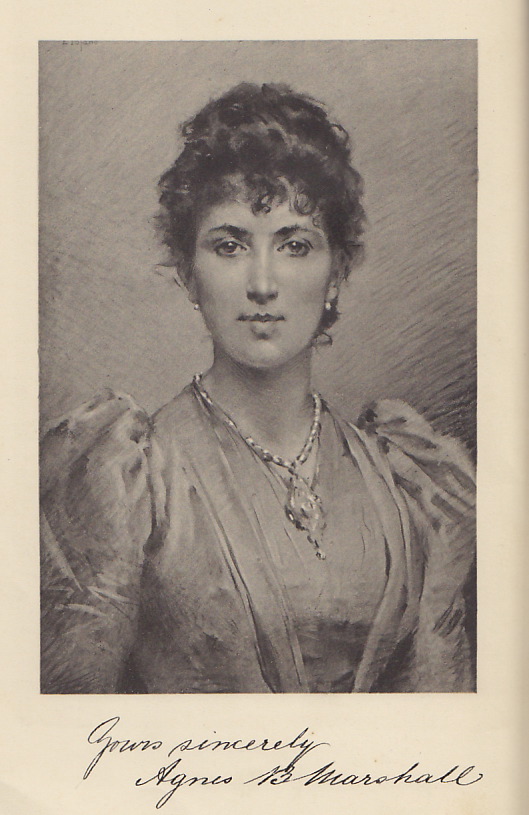
Mrs Marshall and savouries
I’ve been intrigued by the savoury course served in past times after dessert… now all that reminds us of that is cheese and biscuits. Mrs A.B. (Agnes Bertha) Marshall published her Cookery Book in 1888; she was a professional – she had cookery schools, had products, both edible and functional which she promoted and sold, and she published books. Her Cookery Book is almost a professional handbook to cooking and its associated arts, and she does write in a very plain-speaking and focused way.
Here’s her introduction to her section on savouries:
I have yet to speak of savoury entremets (small dishes served between courses or after dessert) which are now so generally served, both at large and small dinner parties, either in lieu of sweets or in addition thereto. Many person eschew sweets either from questions of taste or of health, or from the tendency which food of a saccharine nature has to produce obesity.
If written in a different style this could have appeared in any cookery book published today! It shows the same concerns for health and weight.
A little cheese to assist digestion, as the saying is, has been the finish to dinners throughout ages, and still holds its ground among the great mass of the population. Such indeed is the the simple germ from which the savoury course at dinner has sprung and still preparations in which some cheese of distinctive character, such as Parmesan, Gruyere, &c, figures, are among the most popular dishes for terminating the repast.
In her section on savouries, Agnes has quite a few cheesy ones, Welsh rarebit (of course!), profiteroles au Parmesan (sounds delicious!), fleur au Parmesan (sounds like mini cheese flans) Parmesan soufflé, Parmesan fondu (popular before fondu parties of the 1960’s and 70’s, cheese straws and fritters and oatcakes to serve with cheese.
Welsh rarebit:
- 2 slices of white brad, toasted on both sides, well-buttered, cut into squares
- ½ lb good Cheddar cheese
- 2 tbsp thick cream
- 1 tsp English mustard
- tiny dust of coralline pepper (paprika)
- put all the rarebit ingredients in a pan and stir ’till the mixture is like cream”
- put the toast onto a hot plate and pour over the cheese mixture
- brown it quickly ‘in front of the fire, or with a salamander’ or under the grill
- serve at once

 Lois Elsden