I came across the obituary for my great-great-grandfather, Samuel Moses:
THE LATE SAMUEL MOSES:
A correspondent of the Jewish Chronicle, London, writes : –
On Sunday a good and pious Israelite was laid. in the fields of Willesden. As in his lifetime it was granted to him by his example and exertions to cause his brethren to observe their holy religion and follow ‘the religion of their forefathers, so it was fitting his death and burial should sanctify a future resting place for the people whom he loved.
The sphere in which he so well laboured for his religion lay far from the place of his birth. When first he visited the Antipodean shore of Tasmania the Jews were rapidly sinking into the oblivious past all those rites and ceremonies which have made Israel, by the divine blessing, the one and peculiar people.
With the assistance of Mr. Louis Nathan and Mr. H. L. Beddington, a house of prayer was erected. Prior to his departure from England ho qualified himself for the performance of the Abrahamic rite, and many a time, during, his residence in the colony, he travelled great distances to render this service to his co-religionists.
In 1845 the congregation of Hobart Town presented him with a testimonial of his services. Again, on quitting the colony for Europe in 1858, the congregation by a similar act evinced their appreciation of his zeal during the many years he had acted as their President.
His exertions, however, were not confined to Tasmania, for all the colonies of Australia at various times witnessed him leaving his family and business in order to further the cause of our holy religion. In later years as an active magistrate and justice of the peace in Tasmania, he successfully brought his influence to bear in order that those unfortunates of his brethren who languished under the severe penal regime of the colony might be permitted to attend divine worship in the synagogue on solemn occasions, to observe as far as practicable the Jewish holidays. To the sick, the weary, and the dying, he was indeed a friend, and at many a humble deathbed has he administered divine consolation. Unobtrusive, kindly and generous, be loved to work good deeds alone, and in the silence that gives not pain to the recipient.
Calmly and religiously did he prepare to take that journey from which no traveller returns. On the morning of the day of his death he sang aloud these sacred hymns and prayers he had so often rehearsed by the deathbed of others, and blessing his children, resigned himself into the hands of the Almighty ; and thus calmly and peacefully, surrounded by his sons, while the minister (the Rev. Mr. Green) solemnly chanted the prayers for the dying, he passed away.
[The body, according to the request of the deceased made on his death body, was laid, and was the first laid, in the New Jewish Cemetery, at Willesden, for a description of which, and of the inaugural ceremony, we shall endeavour to find room ¡n au early issue of The Mercury.]
Samuel died in 1873 in London, and as it mentions, was the first person to be buried in the New Jewish Cemetery in Willesden Green. His wife, Rosetta died nearly thirty years later but was buried with him, and several of his sons have graves adjacent to his.

You can clearly see the inscription, and beyond his grave you can see Rosetta’s; next to her is one of their sons, Henry Edward Walford. If you look behind Henry’s pink grave, you can see another, seemingly bare of inscription. This is where my great-grandfather Louis lies.
On this side of the gravestone the inscription is written in English, on the other side it is written in Hebrew; it is on Samuel and Rosetta’s and Henry’s. On this side of Louis’s grave it is blank, and the English inscription is on the back, as if he is facing away from his brother and parents. Why did his mother bury him in 1895 like this? Why? Because he had lived with my great-grandmother Lois without marrying her, and bringing up their five children with her.
Reading Samuel’s obituary and realising how highly thought of he was, and what patently very good man he was, I cannot imagine him behaving to his son Louis like this… Samuel died many years before Louis met Lois, would he have been so cruel to his son? I don’t believe so.


Thank you for your incredibly interesting website. I’m writing about the Moses/Moss brothers of London, Hobart, Sydney, and Montreal – unfortunately just a very small part of a large history of Canada-Australia trade. I’m wondering if you know in which year Samuel Moses was appointed a Justice of the Peace? I live in Tasmania but can’t find it here online. If you don’t know I’ll find out at the state archives the next time I’m in Hobart. Thanks again!
LikeLike
just worked out the answer – Samuel Moses became a Justice of the Peace when a new Van Diemen’s Land Commission of Peace was announced and names published in Government Gazette on October 30, 1855, and republished the following day in The Courier newspaper, Hobart.
I’ll let you know if/when my book gets published,
cheers
LikeLike
Hi Virginia… I’d love to share more with you if you’d like to contact me… are you on Facebook? if not I can give you my email address.
I wonder if you have any knowledge of why Samuel’s sons, including my great-grandfather Louis, changed their names to Walford. I know there was another Jewish family with that name, but i can’t work out how they would be connected except as part of the congregation of the Synagogue!
LikeLike
Hi,
no – I don’t know why members of the family changed their names – the only one that makes sense is Moses Moses possibly wanting a less confusing name and switching to Moss. I haven’t tracked the others with any depth because it’s Moses Moss I’m interested in, as a very successful Sydney merchant dealing in some Canadian goods for a number of years. But I’ve learned enough to see that they were a very adventurous and influential family.
LikeLike
Samuel Moses (partner of Louis Nathan) was my g-g-grandfather; his sons changed their name to Walford. Many of their cousins changed their name to Beddington… and again I don’t know why!
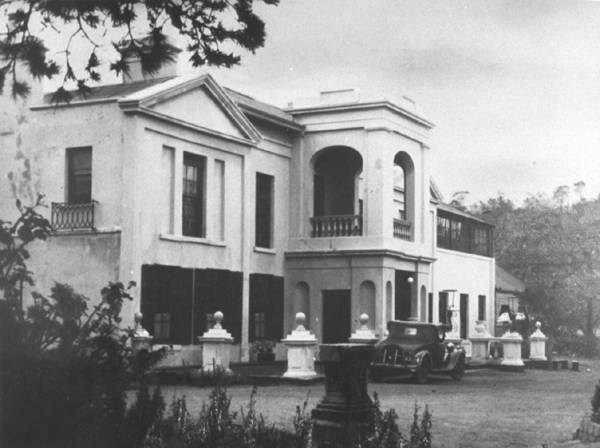
I’m sure you know that Samuel and his wife Rosetta lived at Boa Vista? When they returned to England they lived in an equally grand house on Regent’s Park.
LikeLike