it seems outrageous now, impossible to believe that anyone could be taxed on having a hole in the wall of their home or business which they filled with glass to let in light and sunshine. Now you might be encouraged to have big, well insulated windows to let in more light and save electricity, more light coming in makes people healthier. However in 1696, the Window Tax was imposed on the citizens of England. As a result, buildings were made with smaller windows, older buildings had windows bricked up – and sometimes you can see these ‘blind’ windows on the walls of old buildings.Bricking up a window meant it could be unbricked if the tax was ever lifted. There had been vigorous campaigns against it, it was a ‘tax on health’, and a ‘tax on light and air’. What was more it was not a fair tax because rich people in big houses could afford it, it was the lower classes who were affected most..
The idea was to tax the number of windows there was in a building, so no-one was condemned to live in a place without any windows at all. So in 1747 a house with ten to fourteen windows, had to pay tax of 6 pence a window; in the next band, a house with between fifteen and nineteen windows the owner had to pay 9 pence. If you were lucky enough (or unlucky enough) to live in a house with more than twenty windows , you would have to pay a shilling (5 pence in today’s money) This system of taxation was obviously successful as the government continued to not only take the tax but raised it six times between 1747 and 1808. It was raised by reducing the number orf exempt windows to less than six, however it was later raised to eight windows in 1825 to eight windows.
From taxation point of view it was great! It was easy to see how much a householder should pay by just looking at the building. There were exemptions for certain businesses or rooms, such as dairies, cheese rooms and milk houses as long as they were clearly identified by a notice, in some cases it was carved into the doorway. People son started to fight against it by bricking up windows, and building new houses with fewer.
The nineteenth century saw a huge boom in house building as industrialisation and urbanisation increased, as I have mentioned in my novel, Radwinter. It became clear that living in dark, damp overcrowded conditions, increased the mortality rate, disease and ill-health. If you can’t ventilate a room, there are all sorts of difficulties and problems for those living or working in it. Eventually the taxation on windows was stopped; a new tax, a tax on houses and buildings, which we still pay today was imposed in 1851.However, a similar tax in France was not repealed until 1929!
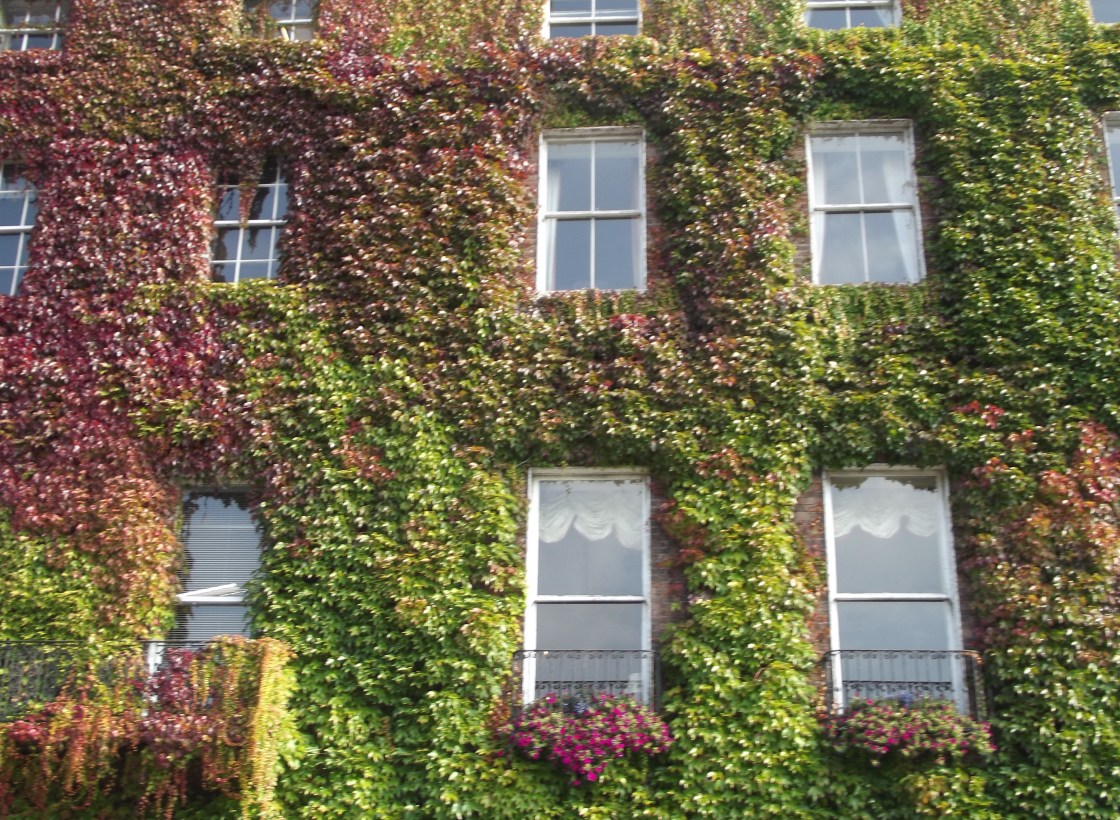
If you look at this beautiful building in Dublin (which as a city in Ireland was part of the British Empire in the days of the window tax) you can see that the windows at the bottom are larger and they get smaller further up to make the buildings seem taller… imagine how much tax the owners would have to pay!


There are still building where this is evident. We have a feed production factory that shows evidence.
I’m sure I once read that the tax was repealed but came back briefly in the early 20th century.
LikeLiked by 1 person
That’s interesting… I must investigate!
LikeLiked by 1 person
My mistake, the tax wasn’t reintroduced.
During the wars, there was a fine for people who had to many windows.
LikeLike
That’s still interesting… and i guess fining someone for doing something is similar to taxing them for not doing it… I think!
LikeLiked by 1 person
My father would play an old George Formby tune called Levi’s monkey Mike. The people of England got so fedup with being over-taxed so they elected Levi’s monkey as PrimeMinister. But as the song goes he taxed the laces in their boots and taxed their Christmas pudding. It was a funny parody but true because even a monkey can’t help but put his hand in your pocket.
LikeLike